The final day of the autumn break also marks the start of the lead-up to Black Week, expected to be another crucial sales period. However, as offers multiply, breaking through the noise becomes increasingly challenging. Consumers are comparing prices more meticulously and making more considered choices. For advertisers, it is no longer just about offering discounts, but about delivering relevant, credible, and contextual messages that assist the audience in their decision-making. In this month’s Utblick, we take a closer look at how outdoor and digital channels can work together to create impact when competition for attention is at its peak.
Explore the autumn’s most creative installations!
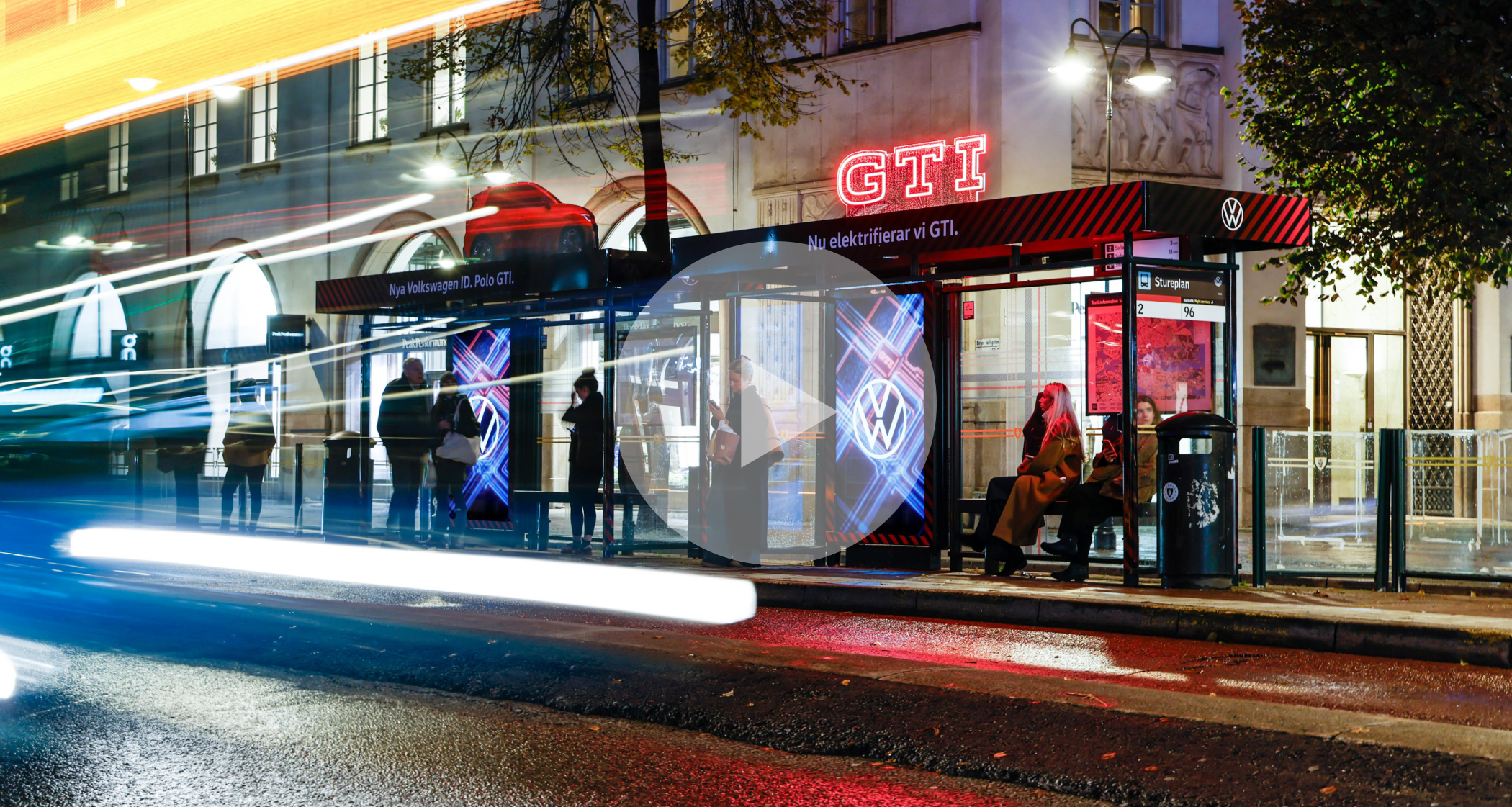
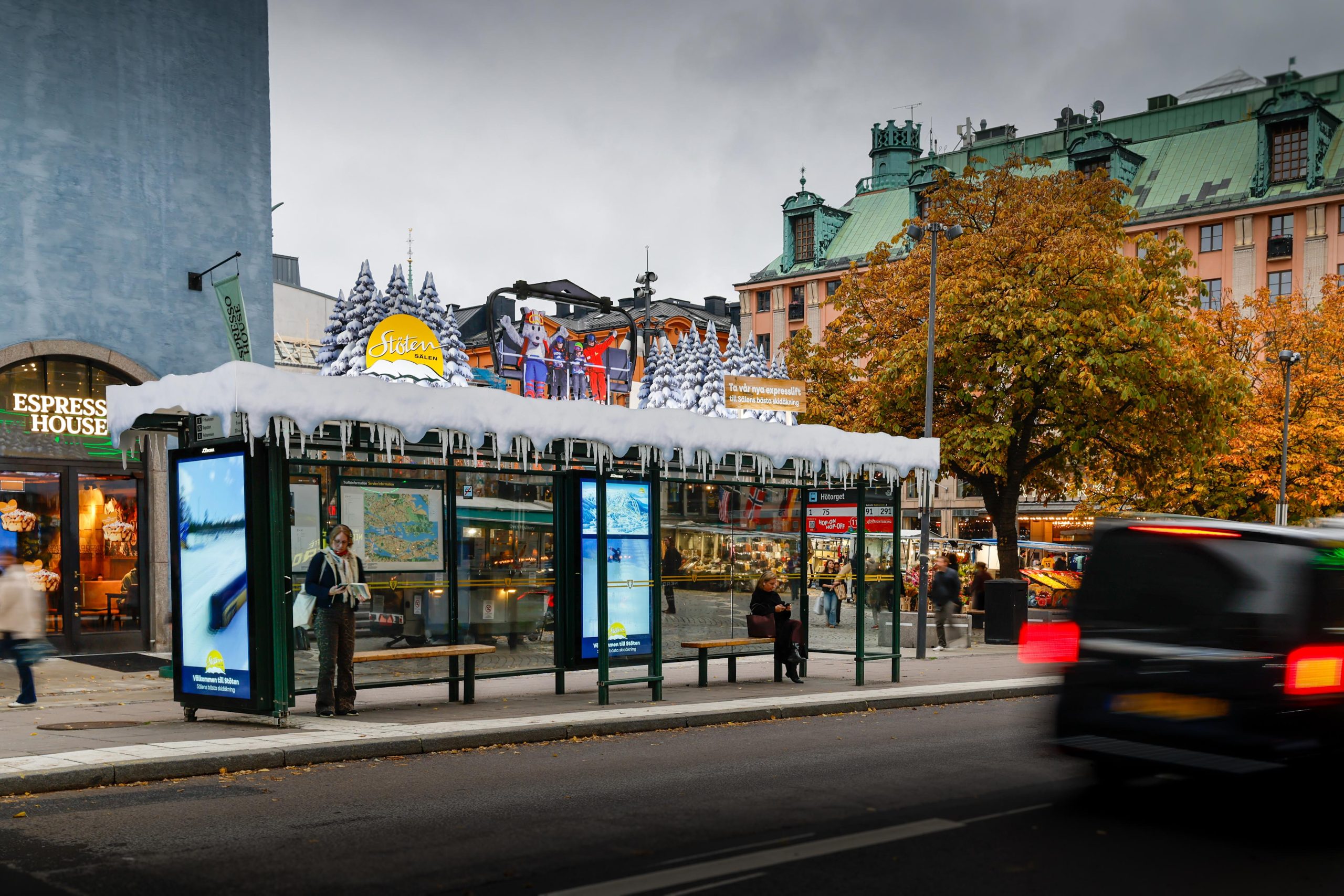
Watch the latest creative installations that captured attention, surprised people in their daily routines, and brightened the autumn dark! 🍂💫
When out-of-home advertising becomes the starting point for a digital journey
Today, people continuously shift between physical and digital environments. That is why we don’t always need to view out-of-home and mobile as separate channels. They can also function as two interconnected parts of the same customer journey.
Out-of-home builds visibility and captures attention in everyday life, while mobile makes it easy for the audience to search, click, share, or take action. When the messaging connects seamlessly across screens, one exposure reinforces the other—delivering a significantly greater impact than either channel could achieve alone.
According to the Exploring Two-Screen Synergy report, 21% of respondents searched for something on social media after seeing an out-of-home ad. Furthermore, 67% stated they would likely pay more attention to the same ad online after first encountering it in another channel.
This proves that out-of-home does more than just build reach: it establishes the initial contact, while mobile deepens the engagement. With the right concept and a clear digital continuation, mobile can drive searches, clicks, shares, and purchases. Together, these channels ensure the message is both more visible and more actionable. In fact, 73% of advertisers surveyed agreed that out-of-home integrates smoothly into mobile marketing strategies.
When each channel has a clear role and the transition between them is seamless, out-of-home evolves beyond a reach medium—it becomes the catalyst for a digital journey.
Three key takeaways:
-
Plan for what the audience should do after exposure. An out-of-home ad doesn’t need to explain everything. Its job is to spark interest and give people a reason to take the next step on their mobile devices.
-
Maintain a consistent concept and visual expression across OOH and digital channels. Recognizing a message across multiple channels makes communication clearer and more memorable. It’s not about running the exact same ad everywhere, but about creating a cohesive experience.
-
Ensure the path from attention to action is simple and relevant. Capturing attention isn’t enough; the next step must feel natural and easy to execute. The audience should quickly understand what is being offered, why it matters to them, and what to do next.
When all of Stockholm was told that the truth would be disclosed
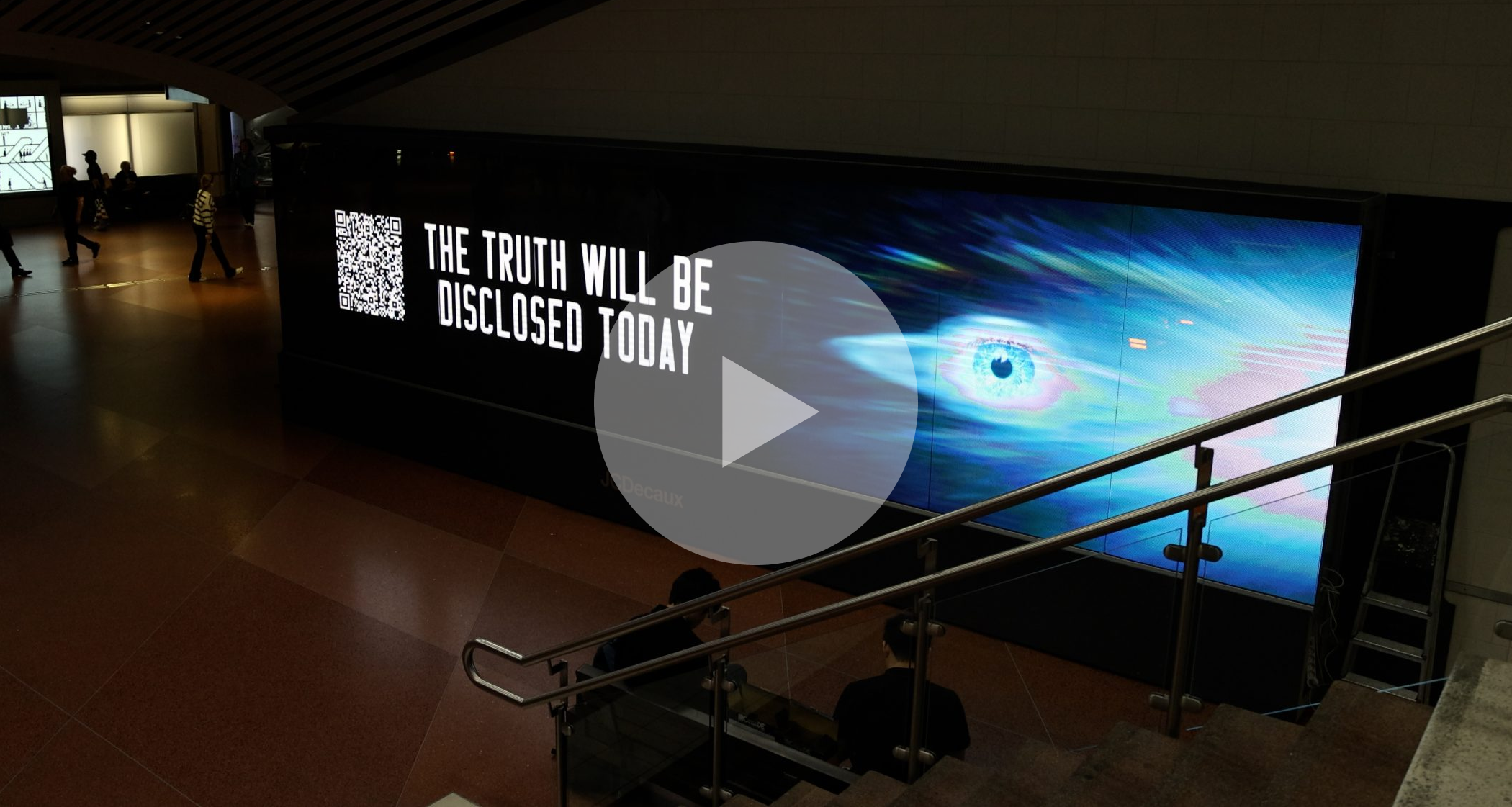
In connection with the launch of Disclosure Day, UIP took over all of JCDecaux’s digital screens across Stockholm for 15 minutes. The campaign message, “The truth will be disclosed today,” appeared simultaneously on every digital screen, creating a highly concentrated moment of attention during the morning rush hour.
This campaign is a prime example of two-screen synergy. The out-of-home medium built reach, presence, and curiosity, while the QR code gave the audience an immediate gateway on their phones to learn more about the movie.