We gather the latest in OOH, DOOH, and prDOOH, from new formats and campaign ideas to trends, measurements, and industry events. Using cities as a platform, we share perspectives and knowledge that help you create communication that stands out, gets noticed, and truly makes a difference.
Insights into a Dynamic Media Landscape
Welcome to our hub for news, insights, and events. Here, we share current observations, analyses, and inspiration from our network in Sweden and around the world. Whether you work in strategy, creativity, or media buying, you’ll find content that offers new perspectives and ideas.
-
Branding has a branding problem, which is ironic.
“Branding has a brand problem, which is ironic. Brands are built over years, but they are managed quarterly—and that is where the problem lies.”
In a recent article for The Media Leader, David Wilding, EVP Strategy at WPP, argues that brands must move away from a focus on short-term sales and instead shift their thinking toward “near-future sales,” “corporate value,” and “circular value”—the outcomes that truly build both a business and a brand. In this episode of the Digital Changemakers Podcast, David joins host Kate Tovey to break down this reasoning and what it means in practice for marketers, CMOs, and CFOs. Drawing on 25 years of experience across agencies, platforms, and advertisers, he explains how performance marketing became the “sensible” default, why reframing “brand” as “near-future sales” changes the boardroom conversation, and how channels like out-of-home (OOH) advertising can signal trust, scale, and long-term value far beyond the final click.
Listen to the podcast via the JCDecaux Marketing Hub, or read on for the key takeaways.
Read David’s full article in The Media Leader here.
KEY INSIGHTS
Why “Brand” should be rebranded as “Near-Future Sales”
-
Performance marketing often feels “sensible” because it is easy to measure and aligns with quarterly targets; however, it can mask the difference between being effective right now and being effective over time.
-
David suggests rebranding “brand” as “near-future sales” to clarify to CEOs and CFOs that brand investment is about growing tomorrow’s sales and enterprise value, rather than merely a discretionary activity reserved for prosperous times.
OOH as a signal of value, trust, and “Circular Value”
-
Out-of-home advertising acts as a public signal that a brand is credible, visible, and here to stay, which increases consumer trust and their willingness to pay a premium.
-
In the UK, 50 pence of every pound spent on OOH advertising is reinvested into communities, public services, and infrastructure, creating genuine “circular value.”
-
Unlike allocating ad budgets solely to a few global online players, investing in OOH, TV, and publishers helps build stronger brands while supporting a healthier media ecosystem.
The brand as a moat: Reducing risk and proving value
-
David uses the McCain case study (IPA Grand Prix) to demonstrate how long-term emotional brand building can significantly reduce price sensitivity and protect margins.
-
To convince CFOs, marketers need to communicate in terms of business growth, risk, and resilience, demonstrating how a strong brand acts as a moat that protects against competitors.
-
The fundamental question is how to build the business and outmaneuver competitors—a goal that naturally leads to more balanced, brand-driven investment across channels like out-of-home.
-
-
Placement and Environment – How street furniture, bus shelters, and standalone units impact effectiveness
Why the choice of format matters in Out-of-Home advertising
Choosing an advertising format is never just a technical detail. In out-of-home (OOH) advertising, the location and positioning of the displays are just as critical as the message itself. Street furniture, bus shelters, and standalone units create different types of encounters with consumers, directly impacting how OOH and DOOH perform against campaign objectives.
Street furniture encompasses surfaces embedded in everyday life: bus shelters, city information panels, and standalone units in pedestrian thoroughfares and town squares. Because they are located exactly where people move, wait, or navigate, they offer both proximity and time with the message. Multiple studies show that formats like bus shelters often generate high ad recall because they combine eye-level positioning with longer exposure times than large roadside formats. Eurosize panels at transit stops build recognition among commuters who see them day after day, while standalone units in squares and along pedestrian paths serve as clear, easily grasped signals in places where people naturally focus their attention.
Larger formats, such as Supersize, perform a different role. They capture the attention of motorists and transit traffic along major arteries and entry roads, where contact time is shorter and the message must be extremely concise. Street furniture complements these by facilitating slower, more intimate contacts—where people walk, wait, or change transport modes. Together, these formats build both broad reach and everyday presence. For marketers, this means the choice of format must align with both the target audience’s movement patterns and the campaign’s role in the media mix: a network of bus shelters and standalone units can provide base reach, while “select” panels can reinforce presence around stores, events, or key areas in both OOH and DOOH.
Source: AdQuick; Alight Media.
A simple way to approach this is to work in layers. First, establish a broad street-level network to ensure visibility in everyday life. Next, supplement this with “select” panels where the target audience is particularly concentrated. Finally, if necessary, add larger screens, billboards, or “Innovate” solutions to generate extra attention. The goal is to move beyond merely counting impressions and GRP (Reach (%) × Frequency) to understanding the specific role each format plays in how people actually move through the city.
-
Gross Price, Net Price and Contact Cost: How Is (D)OOH Calculated?
The question of how out-of-home advertising is costed essentially comes down to three elements: gross price, net price and contact cost. To compare (D)OOH with other channels, you need to understand the relationship between these, and how they connect to reach and frequency in different environments.
Gross price – the starting point for the calculation
The gross price is the starting point. It is the list price for a campaign or for a package of ad units over a given period. In classic out-of-home, this can be networks consisting of:
- Bus shelters and weather‑protected units
- Metro/subway advertising
- Billboards
- Stand‑alone premium units
The gross price typically reflects:
- Duration of exposure
- Demand for the locations
- Estimated traffic flows
- Placement and format
In other words, it is the aggregated price tag for the potential exposure in a given environment, over a defined time period.
Net price – where the calculation becomes comparable
The net price is the actual price after discounts, contractual terms and any package deals. Only when we work from net price does it make sense to talk about how (D)OOH is costed in comparison with other media.
At net price level we can:
- Calculate contact cost / CPM
- Compare different networks, cities and formats
- Benchmark out-of-home against other channels in a media plan / media mix
Net price is therefore the key entry point when we talk media economics and budget allocation.
Contact cost – the CPM logic in (D)OOH
Contact cost, or CPM in (D)OOH terms, is calculated by taking the net price and dividing it by the number of modelled contacts, usually per thousand:
Contact cost / CPM = net price ÷ number of contacts × 1,000
These contacts are based on:
- Measurements of traffic flows
- Adjustments via visibility models that account for:
- Location of the unit
- Direction and speed of traffic
- Type of advertising format
This modelling is provided by Outdoor Impact. Outdoor Impact is the Swedish standard for measuring and modelling reach and VAC (Visibility Adjusted Contacts) in out-of-home advertising, making it possible to compare OOH with other media on a consistent basis.
This means that not all passers‑by are counted as equally valuable contacts. A bus shelter unit may have fewer passers‑by in total, but more high‑quality contacts than a unit along a fast motorway where many people pass without registering the message. In this logic, VAC (Visibility Adjusted Contacts) becomes a key metric. VAC represents visibility‑adjusted contacts that take into account how exposure actually works in real life. When we calculate contact cost per VAC, we get a CPM metric that can be meaningfully compared with other channels, despite the environments being fundamentally different.
Creative solutions – when higher contact cost is intentional
Creative (D)OOH solutions (for example, JCDecaux’s Station Domination in metro environments, or bespoke executions on stand‑alone units and bus shelters) deliberately deviate from standard logic. Here, the cost per contact is higher, but the objective is often to:
- Strengthen the brand
- Create experience and attention
- Generate PR and organic reach
- Deliver impact
In these cases, contact cost should not be assessed in isolation, but in the context of the campaign’s strategic role within the overall communication plan.
A practical workflow for (D)OOH costing
A simple, practical workflow for analysing how OOH is costed is:
Step 1 – Secure the net price
Always work from net price, not gross price, when you compare or optimise.Step 2 – Calculate contact cost
Calculate CPM per contact/VAC for different networks, cities and formats.Step 3 – Compare across networks, cities and environments
Compare contact cost levels together with:- Reach and frequency
- Quality of environment (e.g. bus shelters vs motorways, city centre vs peripheral areas)
This enables you to identify which combinations of networks, units and environments deliver the best reach and quality within a given budget – without losing the quality of exposure behind a single price index.
-
Audience Segmentation in OOH: Driven by Location and Behaviour
Audience segmentation – or “audience segmentation” in English, a term often used even in Swedish – is about defining target groups based on behaviours, locations and movement patterns, not just demographics. In out‑of‑home advertising, age and gender are rarely enough. What really matters is when, where and how people move through the city, and in which situations you encounter them. This is where environments in out‑of‑home and traffic flows become core building blocks.
Major agency groups such as GroupM describe the evolution of DOOH in exactly these terms: as a more audience‑based, data‑driven channel where campaigns are planned around audience behaviour, location and time, rather than purely socio‑demographics (see GroupM/Kinetic Sightline and the launch of Journeys). For context, GroupM’s Journeys platform is a tool for data‑driven DOOH planning, where campaigns are built around people’s real‑world journeys and touchpoints in everyday life, rather than just around individual out‑of‑home units and exposures.
Everyday patterns: Commuters, locals, visitors, shoppers
The first level is segmenting by everyday patterns. Commuters, locals, visitors and shoppers move in different corridors and at different times. Out‑of‑home networks are chosen to mirror these flows:
- Bus shelters and transit advertising along commuting routes capture work‑bound audiences.
- Street furniture and stand‑alone units in city centres capture people moving between offices, retail and services.
- Large billboards along arterial roads can focus on car‑driving segments.
Starting from where people actually move, rather than only who they are, is also the foundation in international overviews of location‑based OOH/DOOH planning, where geodata and movement patterns are used to identify the right environments and corridors (see Factori on location intelligence in OOH/DOOH and AI Digital on geo‑targeted advertising).
Context and location: When the customer is close to purchase
The next level is context and situation. Select units (which can be bought directly or programmatically) around grocery stores, shopping centres or transport hubs are used when the aim is to reach people close to the moment of purchase. Placement of (D)OOH becomes more important than traditional demographics. Two people with different backgrounds may have similar propensity to buy when they are in the same situation.
In practice, OOH audience segmentation often relies on place‑ and situation‑based data rather than individual profiles, which aligns with how leading DOOH players and agencies describe modern audience targeting: focused on location, real‑time triggers and behavioural signals (see, for example, the Perion/GroupM case on more precise audience targeting in programmatic DOOH).
DOOH and prDOOH: Deeper segmentation with time and data
With DOOH and prDOOH, segmentation can be taken further. By controlling when the ads run, you can target messages towards, for example:
- Morning commuters
- Lunchtime flows
- Evening activities
- Weekend shoppers
- After‑work traffic to restaurants and bars
- School and daycare drop‑off/pick‑up
- Late‑evening and night‑time traffic
- Visitors attending major events, matches or concerts
The same screen in a bus shelter can therefore address several different segments across the day. This allows you to combine broad reach with high relevance, without changing the physical infrastructure. The campaign setup, combined with the right timing, becomes the winning recipe for reaching the target segment.
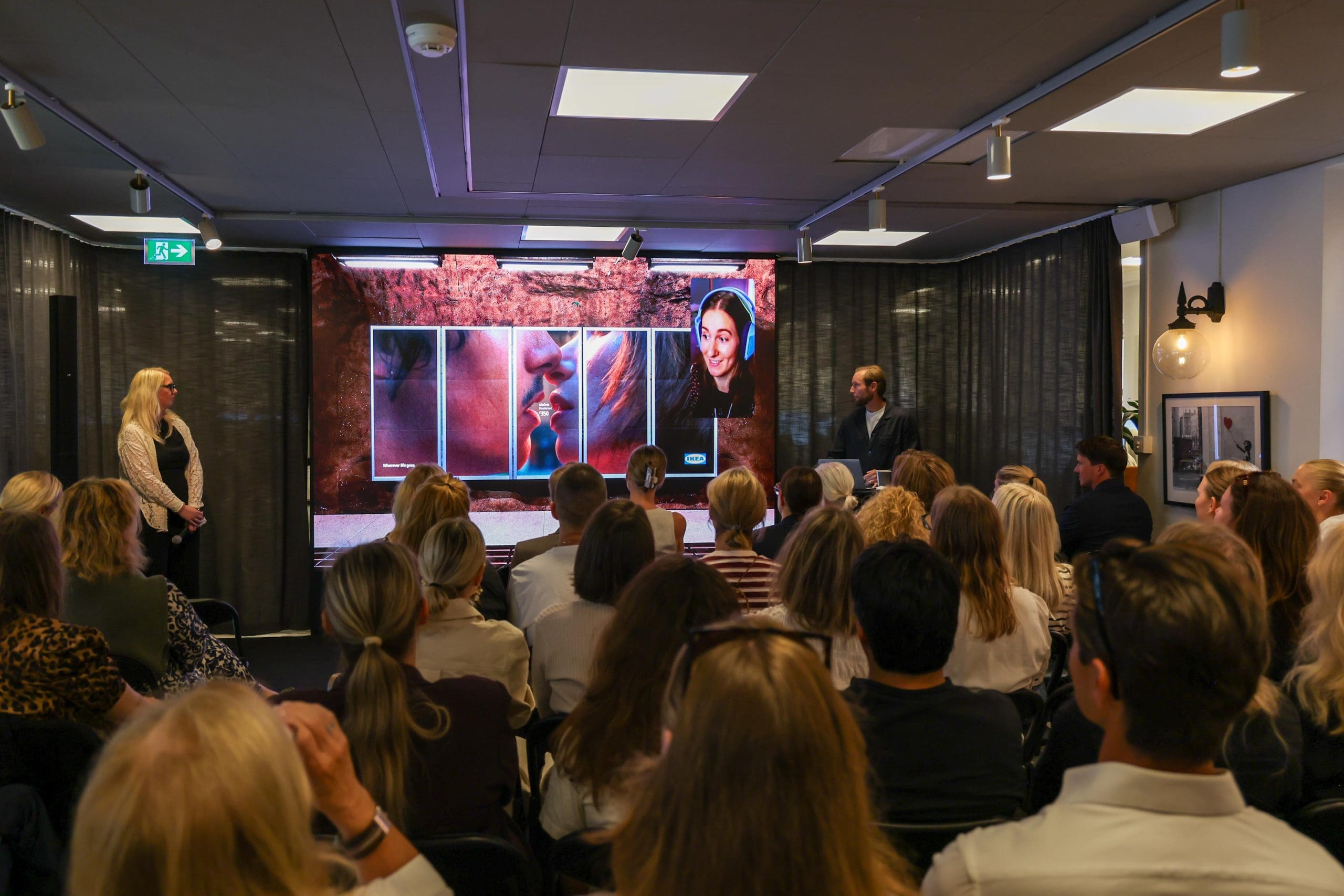
This approach is clearly reflected in GroupM and Kinetic’s DOOH platforms, where the goal is to enable audience‑based DOOH campaigns driven by location, time of day and behavioural data, integrated with other programmatic channels (see Sightline and Mumbrella’s article on data‑driven DOOH planning via Journeys). WPP/GroupM also emphasise in their Nordic overview that data, AI and audience analysis are becoming increasingly important in (D)OOH planning.
Creative OOH solutions for strategic segments
Creative OOH solutions / special builds are used more selectively within the segments that are most strategically important. A 3D outdoor execution or a semi‑takeover campaign around a central location can be designed to reach a priority behavioural segment. There are countless such segments – to give a few examples:
- Tech‑interested city commuters
- Families on their way to retail parks
- Evening visitors in restaurant and entertainment districts
- Early‑morning commuters to industrial and logistics areas
- Students moving between campus, public transport and city
- Gym‑goers before and after work
- Big‑basket shoppers heading to out‑of‑town retail areas
- Tourists in city centres and around attractions
Impact is amplified when these hero executions are surrounded by a broader network that builds reach before and after contact with the main unit.
In international competitions such as the OAAA OOH Media Plan Awards, campaign planning is highlighted as particularly effective when it is “grounded in audience understanding” and uses budget smartly to reach the right people in the right environments. This confirms the value of audience‑driven planning even for more unusual or spectacular (D)OOH activations.
Data + everyday life = better audience segmentation in (D)OOH
To find the best formats for reach within a given segment, you need to combine:
- Data on traffic flows and placements
- A clear picture of the audience’s everyday life and situations
Key questions therefore become:
About the audience & situations
- How does weekday behaviour differ from weekends for this audience?
- What are their travel habits (car, public transport, bike, on foot)?
- Which places are shared by most in the segment (work areas, schools, malls)?
- Are there clear micro‑segments with distinct movement patterns (e.g. parents of young children vs young singles)?
About purchase context & decision journey
- Where is the audience just before purchase (physically and mentally)?
- What role should OOH play: driving store traffic now or building preference for later?
- Which triggers influence them most: price, convenience, novelty, status?
- How long is the gap between exposure and the opportunity to act (store/web)?
About environments & touchpoints
- Which environments do we want to dominate, and where is it enough just to be present?
- Where is competitive noise highest – and where can we own attention?
- In which environments is mobile usage strongest (as a complement to DOOH/OOH)?
- Are there specific “high‑value” locations tied to the category (gyms for sport, grocery for FMCG, airports for premium/brand)?
About formats & creative requirements
- Do we need motion (DOOH) to explain the message, or is static sufficient?
- Where is high frequency (many smaller units) needed vs high impact per contact (iconic units)?
- Does the message need to adapt by place/time (e.g. different message for inbound vs outbound commuters)?
- Which formats integrate best with the rest of the media mix (social, search, TV)?
About measurement & learning
- What is most important to optimise: reach, frequency, footfall, online behaviour?
- Which units can be linked to store/place visits (footfall attribution, geo‑data)?
- Which hypotheses do we want to test between formats/placements in the campaign?
- How will we use learnings from this campaign for the next wave (always‑on or bursts)?
Audience segmentation for out‑of‑home thus becomes a way of working, not just a booking method. You start from movement and situation, and let units, formats, networks and buying logic be shaped accordingly.
This shift – from simple demographics to more advanced, data‑based audience planning in OOH/DOOH – mirrors the development driven by large media agency groups through their own DOOH solutions and recommendations (GroupM/Kinetic Sightline, WPP/GroupM Nordic) and OAAA’s focus on audience‑based planning.
-
June Marketing Outlook – Utblick
High summer temperatures, upcoming holidays and European Championship fever – the city is covered in blue-and-yellow campaigns 💙💛⚽. Before you shut down your laptop for summer, we’d like to share an interesting insight on colour in marketing and an interview with a brand that chose to go against the flow.
Rethinking colour in marketing
Instead of chasing the “right” colour based on simplified colour psychology, marketers sometimes need to think in reverse. Certain colour analyses have over time become almost unquestioned norms – for instance, “blue signals trust”. Modern research clearly shows that it’s far too simplistic to assume that colour alone determines how credible a brand is perceived to be. If your industry is already saturated with blue, as is very much the case in financial services, it is far more strategic to enter with a distinct alternative colour than to launch yet another blue campaign.
So the right question is not: “Which colour creates the most trust?” Instead, ask: “Which colour strengthens our positioning, reflects our promise, and cuts through for our specific target audience?” And then dare to stick to that colour consistently over time.
You’ll find an example of a brand that chose a completely different colour direction from its competitors further down in this letter.
Insight from JCDecaux & System1
A study from JCDecaux and System1 shows that truly memorable advertising is built on the same key components: bold colours, strong contrasts and faces. The study indicates, for example, that strong colours increase emotional impact by 22% and work as a visual magnet in the surrounding noise. Read more here!
Three questions to Natalie Kraft, Marketing Manager Nordics at Klarna
When you chose pink in a category dominated by blue, what was the key argument that gave you the confidence to go against established “colour psychology truths”?
I wasn’t working at Klarna when the shift happened – it was before my time – but I know there were a lot of discussions about how a financial service is expected to signal safety and seriousness, and that blue is the obvious choice for that. Pink could therefore feel like a risk to our credibility – after all, we’re dealing with people’s money.
What gave us the courage to move ahead was the realisation that we needed to follow a different recipe than all our competitors in order to stand out. We wanted to show that payments don’t have to be boring and that pink actually signals accessibility and relevance rather than a lack of seriousness. It was also a way to reach a younger audience that doesn’t necessarily recognise itself in the traditional tone of voice used by banks.What role has out-of-home played in establishing Klarna as a bold and distinctive brand?
Out-of-home is a fantastic channel for creating impact and making an impression in people’s everyday lives. You can’t just scroll past an OOH ad the way you can with digital advertising, and with our colourful brand palette it’s been genuinely fun to show up out there and capture people’s attention. In addition, out-of-home is a powerful way to claim physical space, which gives extra weight to both our campaigns and our brand.
Is there a specific campaign that stands out in your journey – and why?
My personal favourite, and a campaign we still talk about internally, is “Smoooth”. It’s iconic, and I think that’s precisely because we did everything the industry didn’t expect. “Smoooth Dogg”, fronted by Snoop Dogg, really showed our bold side. I remember from one of my first meetings with our CMO David that if anyone said, “No, we can’t do that, we’re a bank”, it only made him more determined to go through with the idea – because then it was unexpected and would make an impact. I actually believe most Swedes remember that campaign.
Kick-start autumn with us!
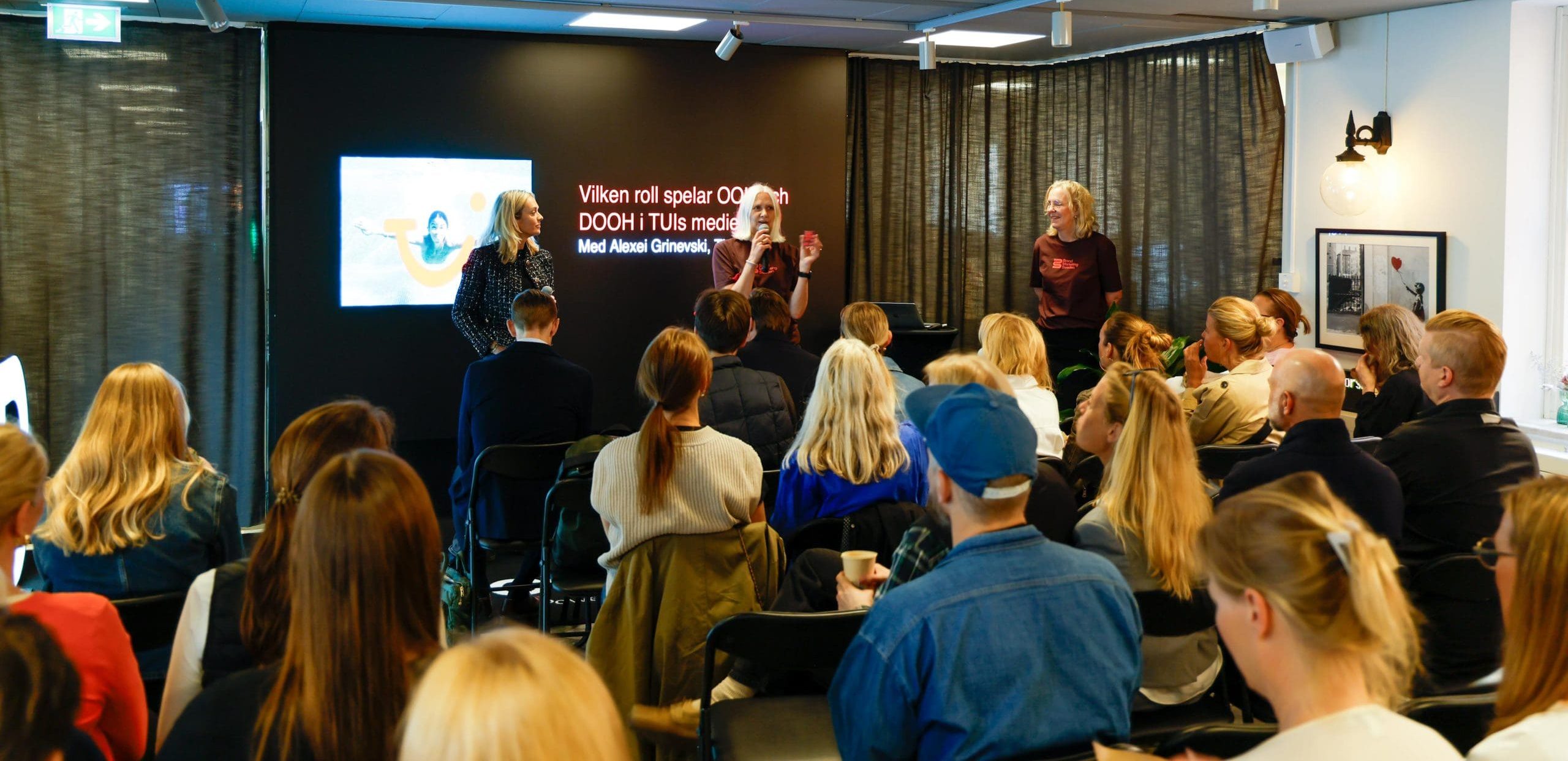
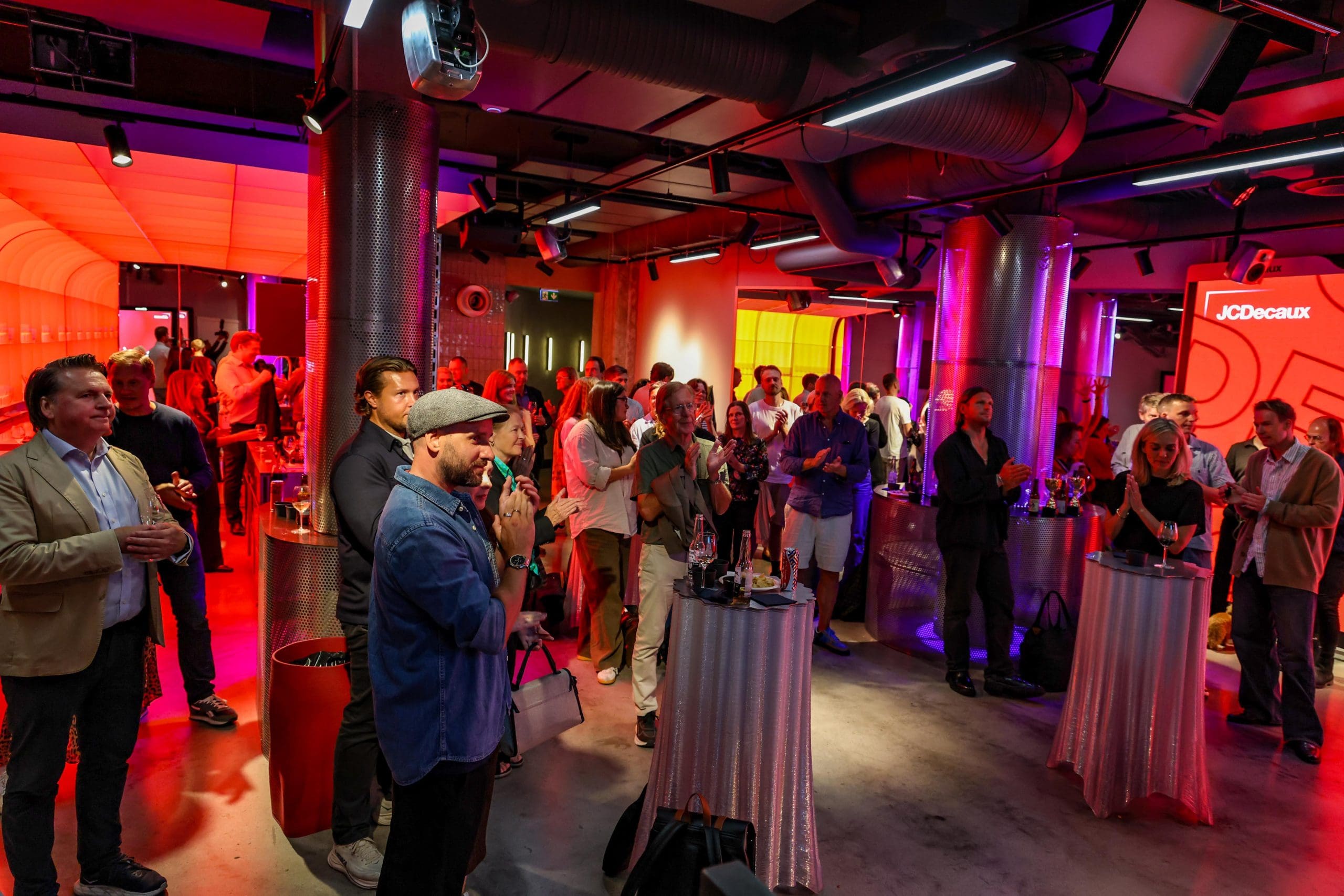
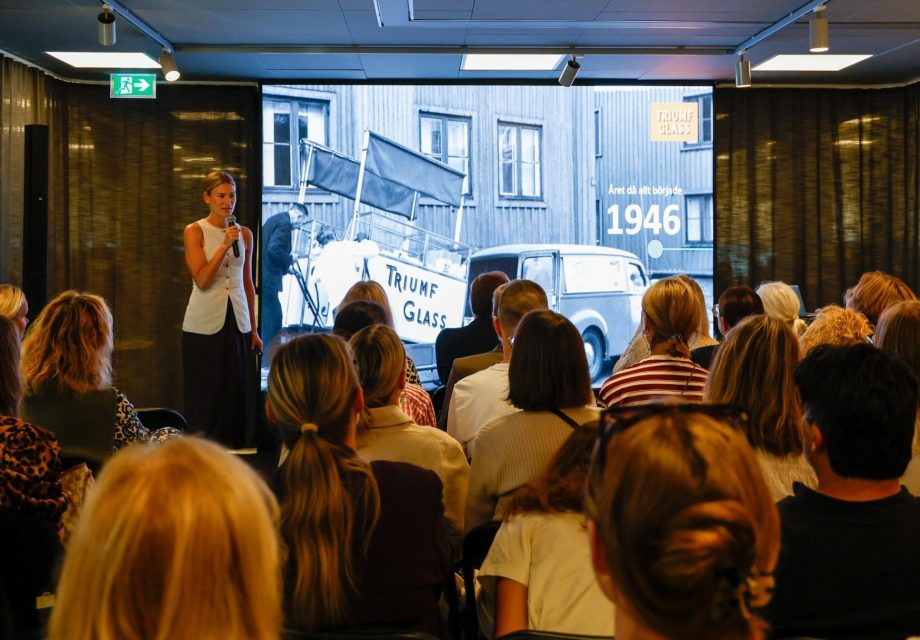
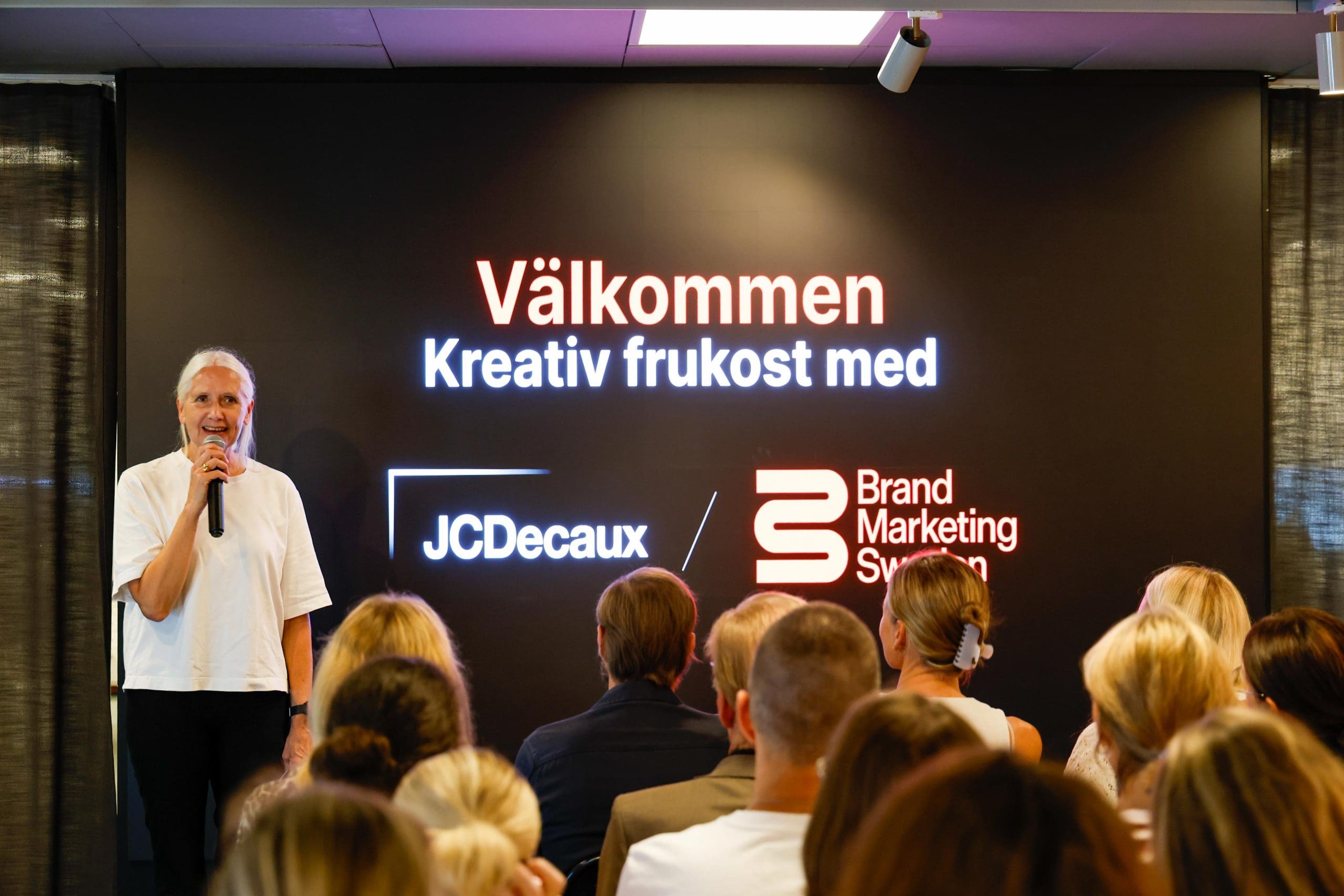
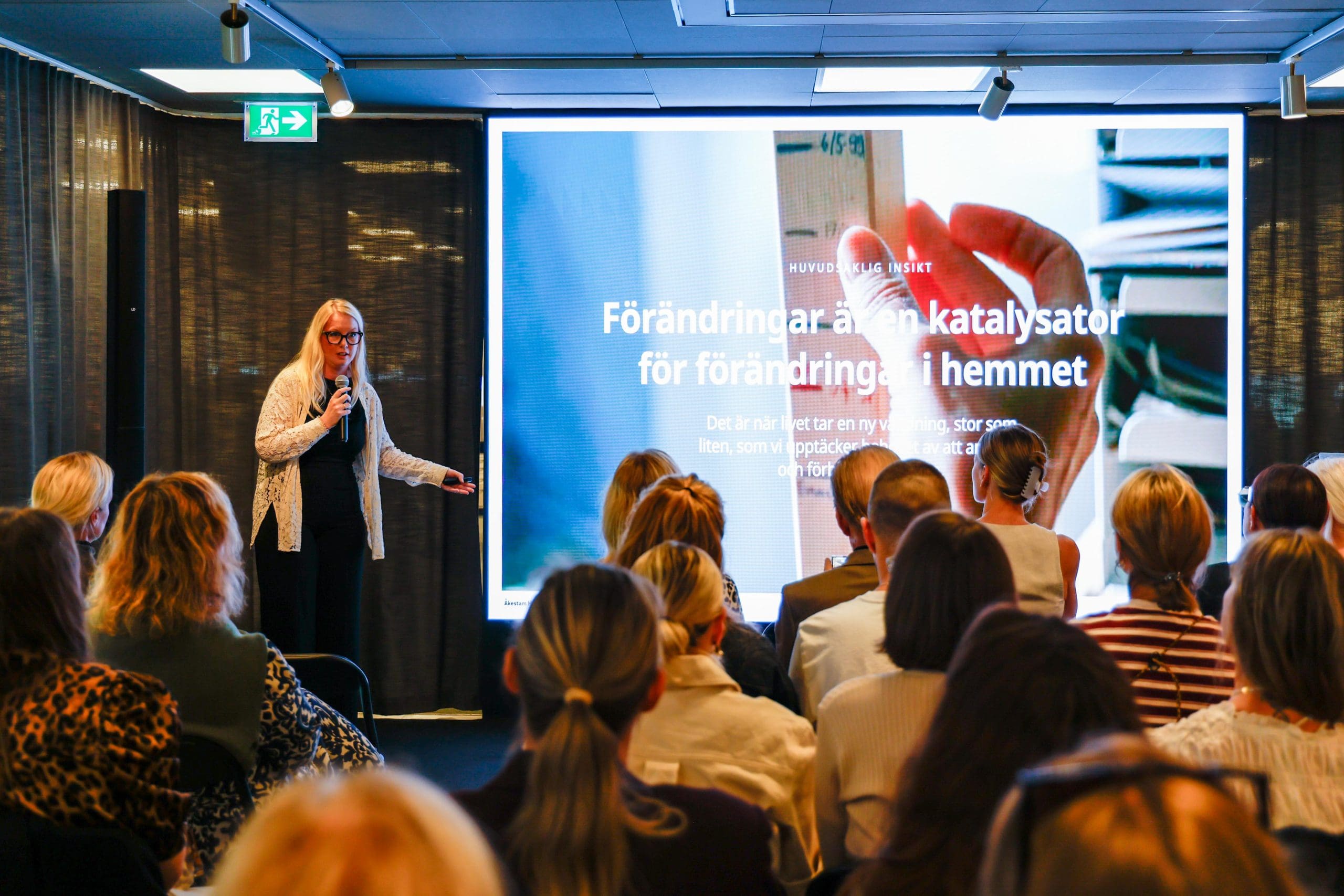
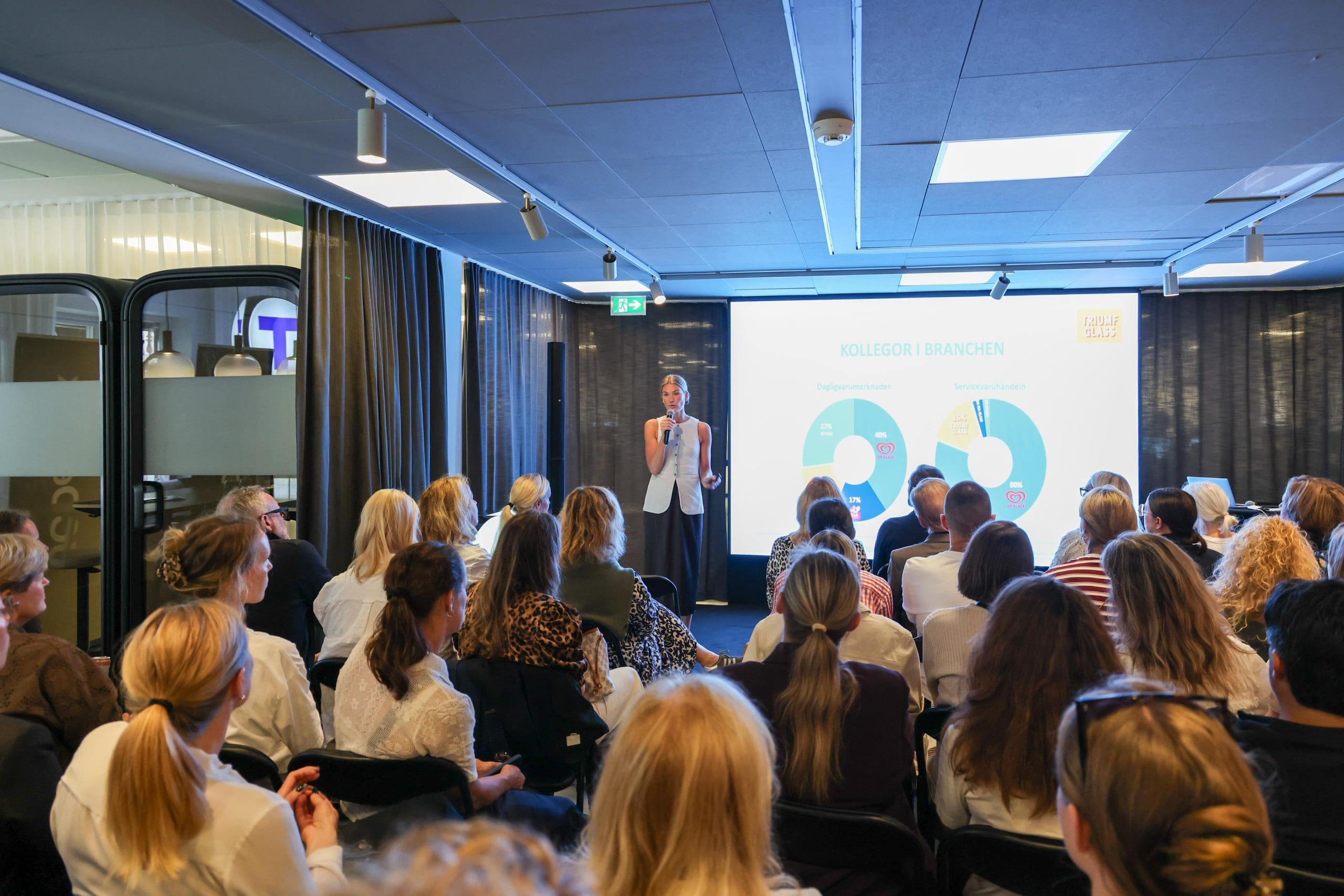
On Thursday, 27 August, we’re hosting the first “Creative Breakfast” of the autumn together with Brand Marketing Sweden. Among the speakers, Moa Frisk, Marketing Director at Triumf Glass, will share their brand journey from a local brand to national reach. Sign up here!
We wish you all a fantastic summer and round off this edition of “Utblick” with creative inspiration. See you in August ☀️🏖️😎🌻
-
Guerrilla Marketing, Live Events and OOH: When Does a Stunt Make Business Sense?
Guerrilla marketing is compelling: with the right idea, a single stunt can generate impressive attention in a very short time. According to data from the Guerrilla Marketing Association, around seven out of ten marketers state that guerrilla activities are effective for building awareness, and almost two thirds also report an actual sales uplift following their stunts. International case studies – from Blendtec’s “Will it blend?” to Uniqlo launches with graphic guerrilla executions – show that a well‑executed stunt can deliver both millions of impressions in social media and tangible impact in the form of queues outside a newly opened store. A well‑planned activation can therefore trigger a “waterfall effect” that organically spills over into other media.
However, if the impact is to last longer than a few hours, the activation needs to be connected to something bigger.
This is where out‑of‑home advertising becomes the backbone, as it builds reach, frequency and continuity, and delivers very broad coverage according to IPA TouchPoints, with dwell time on par with TV and higher than many other major media channels. Combined with social media, a stunt can achieve enormous amplification, but without a solid (D)OOH foundation it risks becoming a costly one‑off event that many talk about but few are actually influenced by.
In (D)OOH environments, guerrilla marketing almost always involves transforming a place for a limited period of time – and doing it in a way that people can genuinely participate in. It can be a specially built solution on existing sites, a so‑called Innovate installation, a 3D outdoor execution, a local takeover around a key hub such as a metro station, or a more “organic” activation where people, happenings or unexpected elements in the streetscape become part of the experience itself. The experience is powerful in that exact moment. Studies of creative and engaging (D)OOH activations show that campaign effectiveness (in terms of recall, brand impact and action) can on average increase by 7 to 17 per cent compared with more standard out‑of‑home solutions, according to JCDecaux’s “The Point of Social” insights (+7%) and the multi‑stage study “The Moments of Truth” (+17%). The *real* effect occurs when people subsequently encounter the same brand again, in more “everyday” formats, across more locations in their daily lives.
To succeed with guerrilla marketing in (D)OOH environments, you first need absolute clarity on why you are doing it – and this “why” usually boils down to three things:
Guerrilla marketing works best when you are launching something new, looking to reframe the perception of the brand, or aiming to create buzz within a clearly defined target audience. In those situations, a spectacular or unconventional activation in connection with different types of advertising assets can be exactly right – especially in locations with high natural footfall and a self‑evident position in the city.
The second aspect is how the stunt connects with everything else. A stunt should almost never stand alone. A network of out‑of‑home sites around the location ensures that more people see the message both before and after the activation itself. With DOOH and programmatic DOOH (prDOOH), you can also time‑optimise messages in the same environments, for example just before a product launch or when a new physical store opens.
The third aspect is what you want to achieve from the initiative. Guerrilla marketing is a type of activation that usually reaches fewer people than a broad out‑of‑home campaign, but the contacts are much stronger. That is why you need to define from the outset what you intend to measure: increased visits to a store – i.e. footfall attribution? In other words, trying to assess whether, for example, an OOH campaign, digital advertising or a DOOH screen actually drives more people to a specific location, often by combining exposure data with mobile location data or in‑store systems. Do you want to measure engagement in social media? Shifts in awareness or preference? Without clear KPIs, it is difficult to know whether the money would have delivered more value invested in a broader, more traditional media buy.
Creative (D)OOH solutions, guerrilla marketing and larger events simply work best when they are applied with precision on top of a stable, already established out‑of‑home presence. They should amplify a story that is already in motion – not carry the entire communication effort by themselves. When that balance is in place, physical activations and guerrilla marketing can become the sharp edge that makes a campaign both felt and remembered, while a broad (D)OOH presence secures reach and long‑term impact.
-
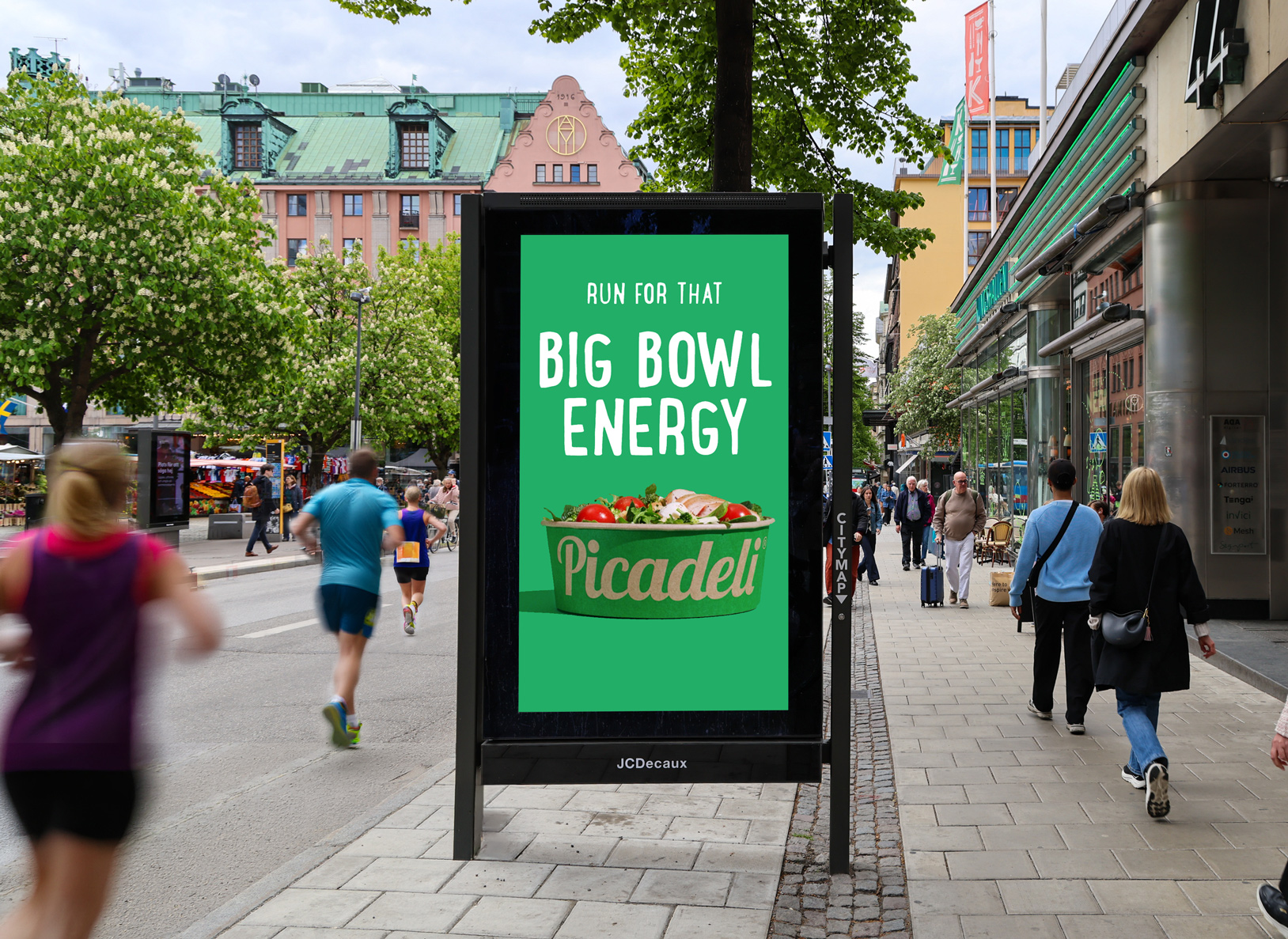
Maximizing Picadeli’s Visibility during the Stockholm Marathon with Programmatic DOOH
Combining one of Sweden’s largest sporting events with data-driven technology has unlocked new possibilities. Together with Picadeli and the media agency Scream Gothenburg, we embraced programmatic out-of-home (prDOOH) advertising to its full potential, and the results exceeded all expectations.
The Stockholm Marathon brings together thousands of runners and a massive audience along the city streets. For Picadeli, the challenge was how to best capitalize on this celebration to maximize brand visibility and reach their target audience right at the heart of the action.
A Strategic Approach to a Mobile Audience
To meet this challenge, we implemented a programmatic digital out-of-home (prDOOH) campaign. We strategically selected premium screens along the entire marathon route, providing Picadeli with a presence as dynamic as the race itself—before, during, and after the runners passed by.
By leveraging this technology, we ensured that Picadeli’s messaging was displayed at precisely the right moment, optimized for the specific audiences gathered along the route.
Real-Time Data-Driven Measurement
Historically, one of the greatest challenges in out-of-home advertising has been quantifying the value of “live surges”—the influx of additional audience members during major events. To address this, we utilized VantageOOH, founded by Sebastian Larsson, to measure the actual impact in real time.
The results provided clear, empirical evidence:
- 37% Crowd Surge: The campaign generated a 37% increase in audience flow above the baseline at the activated DOOH screens.
- 90% Surge at Key Locations: At critical locations along the route, such as the Olympic Stadium and the Royal College of Music, we observed a surge of nearly 90%.
“The outdoor currency is based on historical audience data, which makes it possible to use programmatic DOOH to identify occasions and locations with significantly more impressions than the currency indicates. This can be leveraged by advertisers to achieve a higher effective reach in their campaigns. The results of the case show very positive outcomes and serve as a great example of when programmatic DOOH is used in the right way,” says Örs Ovegård Szasz, Head of Programmatic at JCDecaux Sweden.
The Future of DOOH is Programmatic This case study demonstrates the power of combining strategic placement with real-time data. By proving the value of mobile audience flows during a live event like the Stockholm Marathon, we have taken a significant step forward in how we approach efficiency and ROI in out-of-home advertising.
We are proud that this collaboration is now highlighted as a best-practice example in VIOOH’s global case study library. Read the full case study here: https://blog.viooh.com/case-study/picadeli
Do you want to learn more about how we can help your brand appear in the right place at the right time? Please contact us at [email protected].
-
First glimpse: SL digitizes communication in the subway – Kulturhuset Stadsteatern takes center stage during the construction phase
An extensive project to modernize information and commercial displays at several of Stockholm’s busiest subway and commuter rail stations has commenced. This initiative is part of a long-term upgrade of public transport infrastructure and will be carried out in stages through the autumn.
The project involves replacing older, analog surfaces with new digital technology in partnership with JCDecaux, enabling faster and more flexible communication. These new displays will generate significant annual revenue for SL, contributing to the funding of the public transport system. Furthermore, the digital infrastructure provides SL with greater flexibility to quickly reach passengers with traffic information during disruptions or other vital public announcements.
“For us, this is about developing a functional and flexible infrastructure for public transport, where different needs must interact over time. These spaces are fundamentally commercial, but they are also a crucial part of how we communicate with passengers when it is needed most, such as during traffic disturbances or other events. At the same time, this investment generates significantly higher revenue for SL than it does today—approximately 600 million SEK per year. It is a vital component in developing and financing public transport in Stockholm,” says Suss Forssman Thullberg, Head of Communications at the Traffic Administration (Trafikförvaltningen).
Installations will be carried out at night, one station at a time, to ensure minimal impact on passengers and to maintain a safe work environment. In total, the modernization covers 12 subway stations and two commuter rail stations, where existing analog surfaces are being replaced by a significantly smaller number of larger, digital formats.
“We are making extensive investments in the subway environment that will enhance the visual appeal and bring Stockholm’s transit environment into the present. By transitioning from many smaller analog surfaces to fewer, more advanced digital formats, we are creating both better experiences and higher quality in our communication,” says Magnus Heljeberg, CEO of JCDecaux Sweden.
As part of the modernization, JCDecaux is collaborating with Kulturhuset Stadsteatern to use the new digital displays for cultural content throughout the summer. The initiative allows Kulturhuset Stadsteatern to reach a broad audience with information about their activities and performances at no cost, with the goal of engaging more Stockholmers and commuters in their daily lives.
“We are very pleased to have the opportunity to showcase the fantastic work of Kulturhuset Stadsteatern in Stockholm’s subway stations, and we hope that even more people will be inspired to experience our cultural offerings,” says Malin Dahlberg, CEO of Kulturhuset Stadsteatern.
The rollout is taking place incrementally, one station at a time, and is expected to be completed by late summer.
Facts
-
600 analog units on track walls are being dismantled. The total number of surfaces will be greatly reduced and replaced by approximately 75 digital screens.
-
The current 1,200 escalator signs will be replaced by half that number of digital screens.
-
The new digital surfaces are expected to generate 600 MSEK in annual revenue for SL, tripling current advertising revenue.
Stations undergoing modernization: T-Centralen (subway + City Line), Slussen, Medborgarplatsen, Skanstull, Gamla Stan, Gullmarsplan, Hötorget, Östermalmstorg, Rådmansgatan, S:t Eriksplan, Fridhemsplan, and Odenplan (subway + City Line).
About SL
Every day, nearly 800,000 passengers travel with SL. SL holds the overall responsibility for ensuring that all residents and visitors in Stockholm County have access to a well-developed, accessible, and reliable public transport system. SL operates buses, subways, commuter trains, local rail lines, and commuter ferries throughout the region. We keep the Stockholm region moving, 24 hours a day.
About JCDecaux
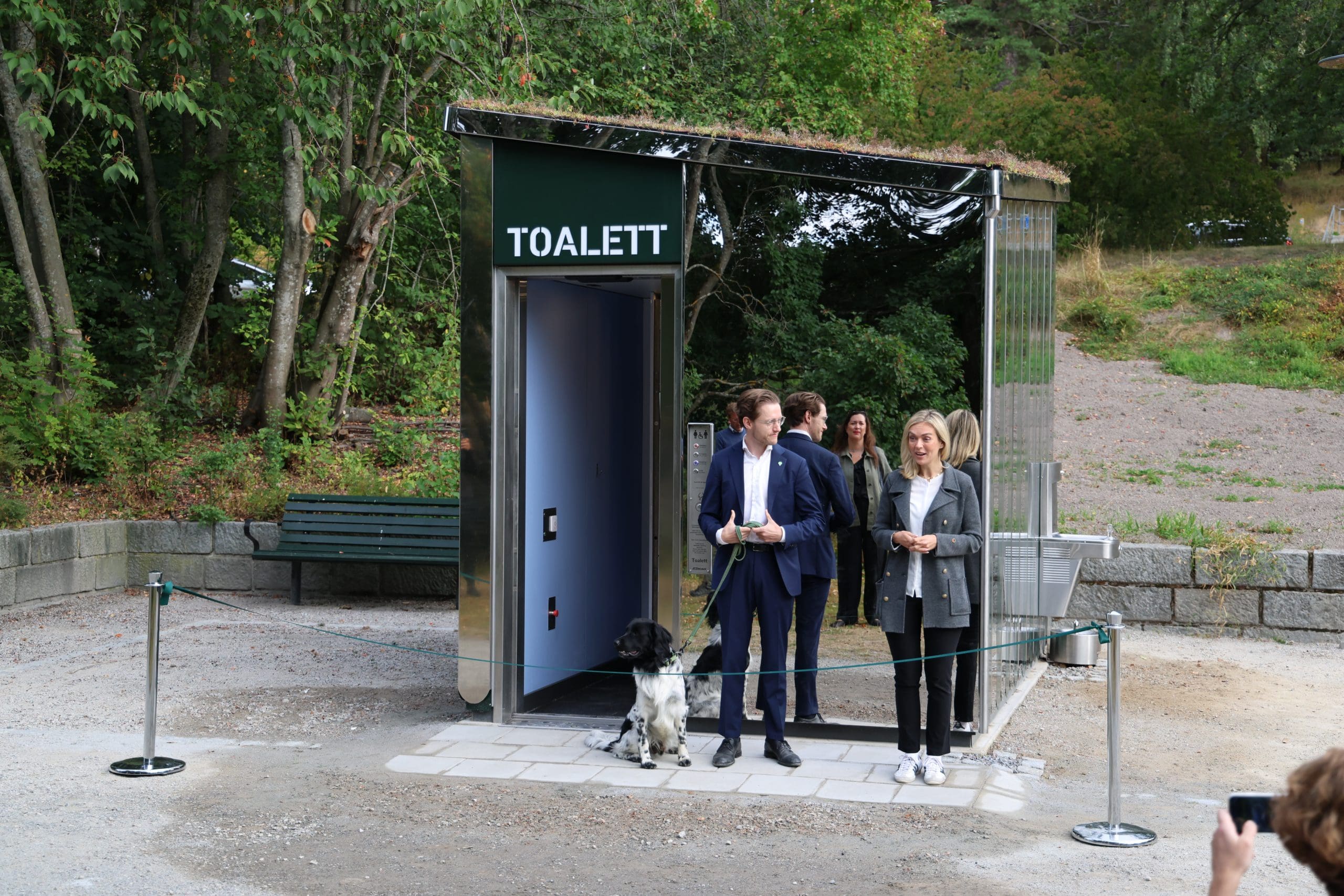
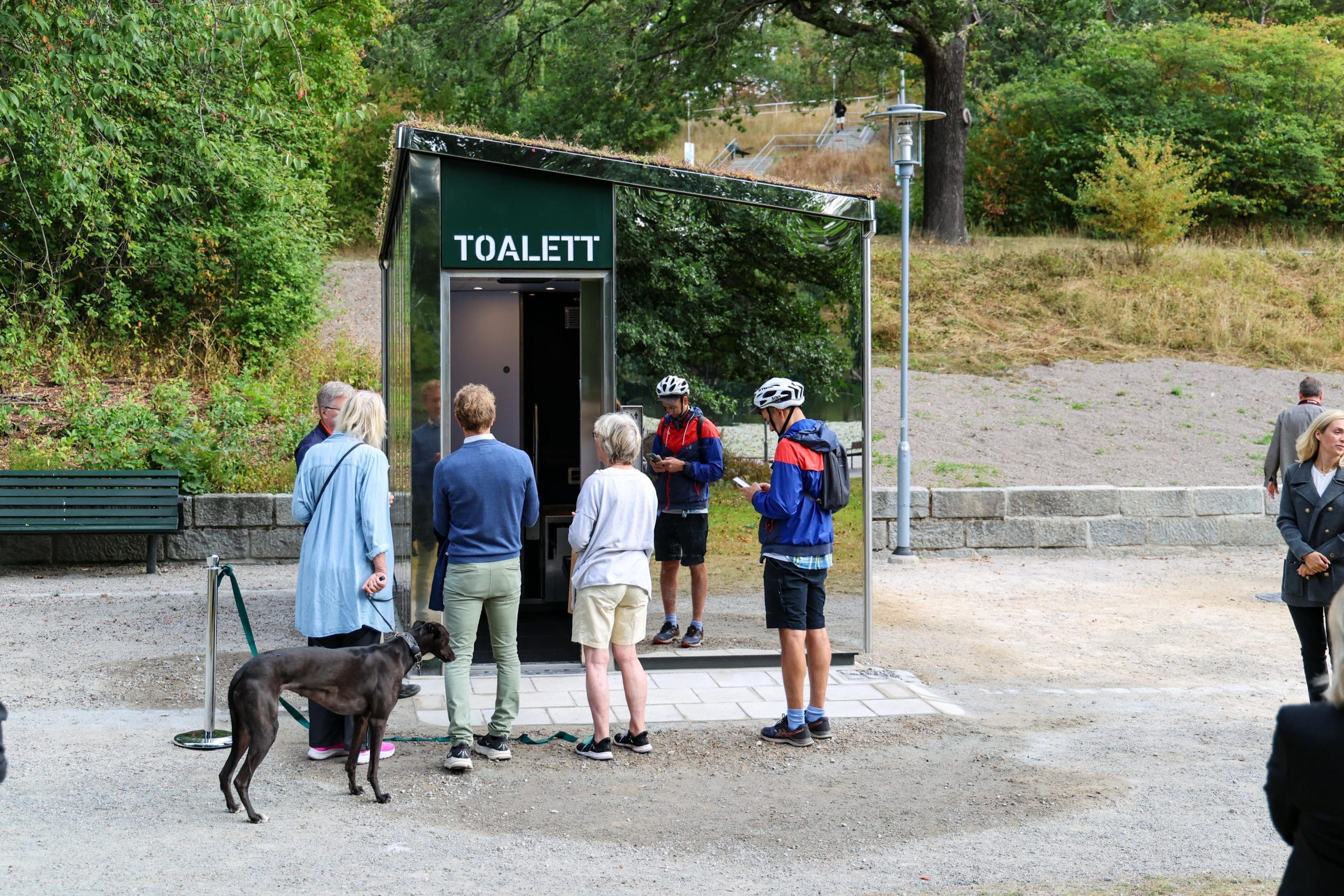
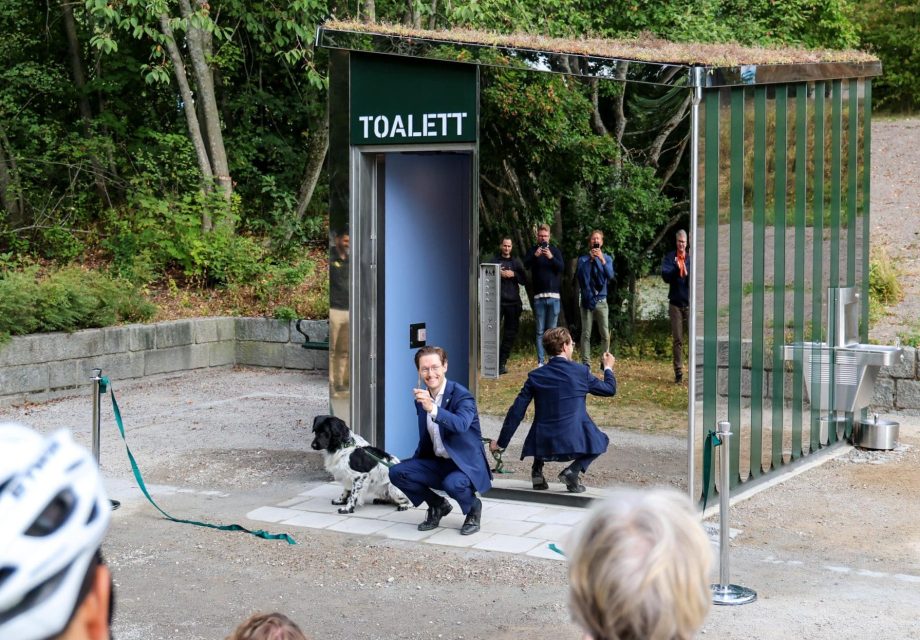
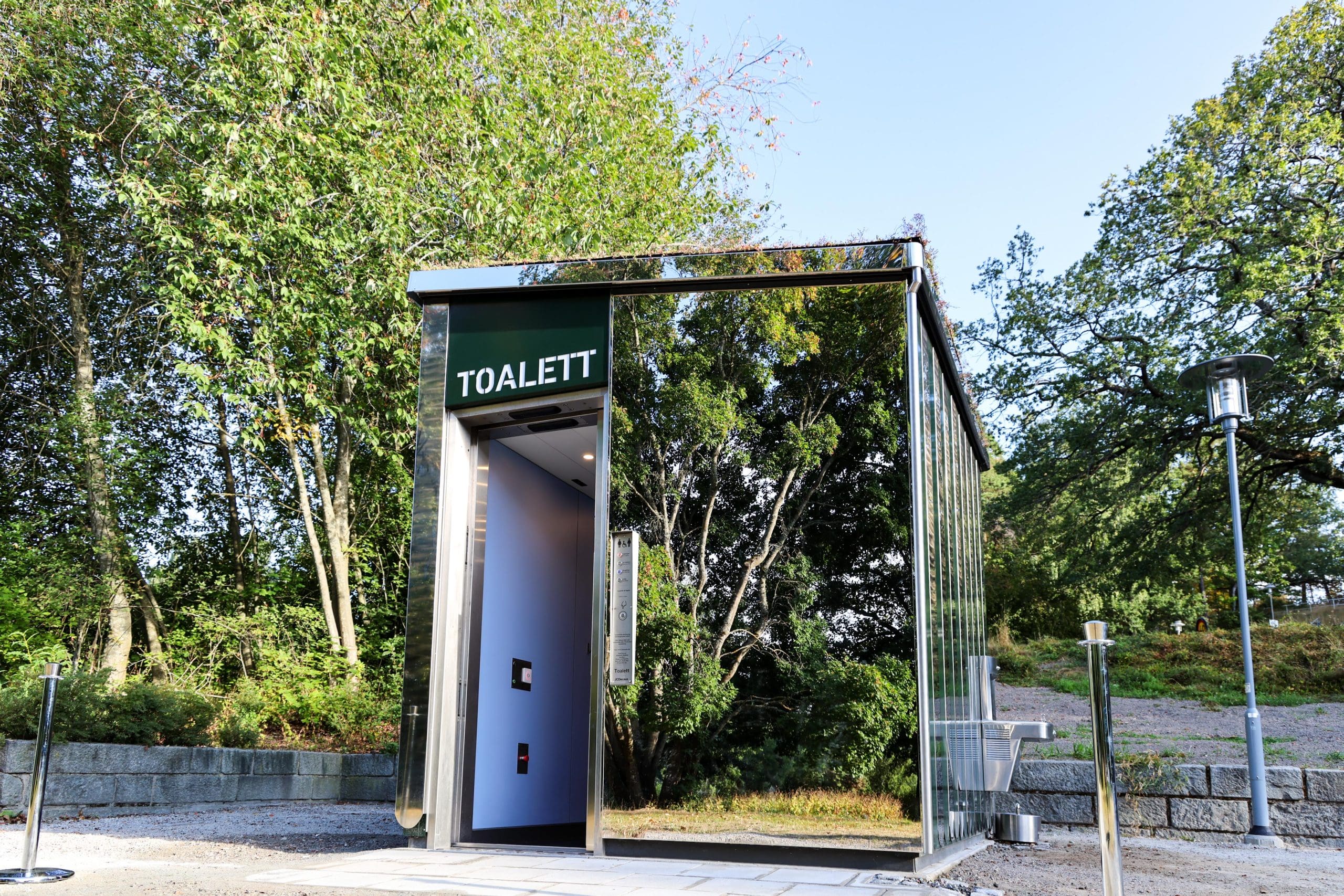
JCDecaux Sweden is part of the global JCDecaux Group and offers a network of outdoor advertising surfaces in the country’s largest cities. JCDecaux is a world leader in the design, installation, and maintenance of street furniture and partners with cities worldwide to improve the public environment. Through an innovative business model, JCDecaux provides essential infrastructure, such as bus shelters, smart city information panels, and automated public toilets. With a focus on aesthetics, sustainability, safety, and digital innovation, JCDecaux contributes to the vibrant and accessible urban environments of the future.
About Kulturhuset Stadsteatern
Kulturhuset Stadsteatern is for every Stockholmer, founded on the principles of freedom of speech and artistic freedom. Kulturhuset Stadsteatern is located at Sergels torg, in Skärholmen, Vällingby, and Husby, and during the summer months, it reaches all of Stockholm through Parkteatern. Throughout the year, it offers a wide range of performances, concerts, exhibitions, discussions, and creative workshops, as well as four unique libraries for all ages. With 2.5 million annual visitors, Kulturhuset Stadsteatern is one of Sweden’s most visited cultural institutions.
-
-
Innovate & Special Builds – when should you go beyond standard formats?
When is it worth going beyond standard OOH formats?
Out-of-home (OOH) advertising, both traditional and digital (DOOH), is typically built on standardized formats and sites. This provides predictable reach, clear pricing, and straightforward planning. However, when is it justified to step away from the standard and work with Innovate and special builds? The answer depends on the campaign’s role in the media mix, the complexity or novelty of the communication, and the type of outdoor environment you wish to leverage.
Multiple analyses indicate that creativity and standout solutions act as a multiplier for OOH effectiveness. EMC Outdoor refers to a five-year study from industry colleagues at Clear Channel Outdoor and Kantar, which shows that OOH can, on average, deliver 13.3% higher “ad awareness” compared to other channels when the creative execution fully utilizes the medium’s potential.
Source: EMC Outdoor, “Creative Effectiveness in OOH: The ROI Multiplier for Success.”
In collaboration with JCDecaux, Mi3 describes how creative quality in OOH is a decisive factor for business impact, and how a framework based on System1 methodology links strong creativity to improved campaign outcomes.
More than just reach
Creative activations—so-called “Innovates” and “Special Builds”—are primarily used when OOH needs to do more than simply add reach. Here, the goal is to find a solution where the location and the physical construction itself deepen the idea. This can include three-dimensional installations, modified bus shelters, or expanded and customized standalone units. In some cases, a holistic approach is taken through a takeover, such as a Station Domination, where an entire location or series of sites is transformed into a cohesive experience. Read more about our Innovate solutions [here].
Industry and campaign reviews from oOh!media repeatedly highlight how special builds, DOOH 3D activations, and large-scale creative interventions contribute to higher brand fame and social amplification, especially when physical installations are combined with digital screens and online activations.
Source: oOh!media, “2024’s Most Unmissable Out of Home Creative Campaigns.”
Major media agencies also emphasize that creative and visually powerful OOH is essential for cutting through in an increasingly fragmented media landscape. One Day Agency, for instance, points out that campaigns with a strong creative idea and visual impact are particularly effective at capturing attention and building memory.
Source: One Day Agency, “Our examples of effective OOH advertising.”
The IAB has compiled several DOOH and OOH cases demonstrating how exposure in outdoor environments can drive tangible effects, such as increased foot traffic—effects that are often amplified when the site itself is eye-catching or integrated into its environment.
The power of location and “Special Builds”
Placement becomes extra critical when moving beyond traditional standard formats. Traffic flows and location dictate not only how many people are exposed, but also how long they remain near the campaign. Multiple DOOH strategy guides emphasize that sites where people move more slowly or wait—such as transit hubs, central squares, or major transfer points—provide longer exposure times and better conditions for absorbing both the campaign’s core idea and specific advertiser details.
Source: Placebased, “Digital Out-of-Home (DOOH) Advertising Guide: Strategy, Statistics & Best Practices.”
An example of this is a Stockholm activation where a bus shelter was transformed into a bar. The shelter itself was rebuilt with a bar counter and atmosphere, while the digital Digisize surface displayed a video of a bartender mixing drinks. For passersby, it appeared as though the bartender was actually inside the shelter, interacting with the environment. Here, the combination of a physical special build and a digital screen became the core of the idea, creating both high attention and strong brand recall.
Internationally, there are many similar examples where bus shelters and street sites are converted into experiences. Pepsi, for example, conducted a well-known bus shelter activation in London where a digital screen was used to create an “augmented reality” experience directly within the shelter, leading to extensive social sharing and PR value. Read more via [Grand Visual].
Strategy: Standard as the backbone, Innovate as the amplifier
Innovate solutions are particularly well-suited for major product launches or when a brand requires a clear physical manifestation. Media and specialist agencies often argue that high-impact (D)OOH formats are most justified when the goal is to build brand fame, spark conversation, and drive extra attention around a new product, repositioning, or major campaign.
To determine if an Innovate activation is justified, you must weigh the cost and complexity against the role (D)OOH plays in your overall media mix. When a campaign aims to achieve more than mere visibility, and there is a clear idea that truly leverages the site, stepping beyond standard formats becomes a natural choice. In other cases, well-planned standard sites and networks go a long way—a sentiment echoed in various industry reviews, where standardized OOH solutions are described as the “backbone,” while special builds act as “amplifiers” when objectives are set higher.
-
Backlit Out‑of‑Home: Print, Quality and Seasonal Variations
Backlit OOH: more than “light behind a poster” -
Choosing Between Search, Social and (D)OOH – and Making Them Work Together
Search, social and out‑of‑home (D)OOH) play different roles in a campaign but deliver their best results when they are planned together. Search captures active demand, social builds relationships and dialogue, while out‑of‑home creates broad, physical presence that makes the brand easier to choose when a need arises. The question is not which channel is “best”, but what role each channel should play in the overall mix.
Search is ideal when demand already exists or can be triggered quickly – situations where people are actively looking for a solution, a brand or a category. Here, intent is both clear and measurable: you can see exactly which keywords people use, what they click on and what they do after the click, which makes search particularly effective at the point where someone is close to purchase or wants to dive deeper into a specific offer.
Social is powerful when you want to drive engagement, storytelling and audience segmentation over time. The channel is well suited for building relationships and emotions around the brand, testing messages with different target groups and receiving direct feedback through comments, shares and reactions. It therefore works best when the goal is to maintain an ongoing dialogue rather than simply trigger isolated clicks.
Out‑of‑home (D)OOH acts as a visually consistent backdrop in people’s everyday environments – something they pass day after day on their way to work, home, school and leisure activities. Through out‑of‑home networks, where different formats such as Metro, shelters, bus stops, street furniture and standalone advertising panels are bought in curated packages, your brand is established in public space, independent of platforms and algorithms. Studies from IPA and JCDecaux show that campaigns including OOH not only reach more broadly, but also generate clear uplifts in digital response, such as increased search volume and higher overall campaign effectiveness when OOH is combined with social media. Nielsen data (reported by MarketingCharts) further indicates that almost half of those who see (D)OOH go on to conduct an online search for the brand, and around four in ten continue to social media, illustrating how (D)OOH primes both search and social.
When planning combinations in the media mix, you should start from the customer journey. (D)OOH can build early‑stage recognition and mental availability. Social amplifies the story and provides room to explain and elaborate. Search captures those who are ready to act. In practice, we often see that search volume and click‑through rates increase in areas where (D)OOH is active, demonstrating how the channel “primes” the others: it makes the brand more familiar, so people more frequently search for it and click through in social and search. Various effectiveness studies (reported by marketingiib.com) show that out‑of‑home often lifts brand‑related searches by approximately 10 to 50 per cent, consistent with the view that (D)OOH primes digital channels rather than replaces them. Nielsen‑based analyses (reported by verticalimpression.com) show that campaigns including (D)OOH can, on average, increase performance in other digital channels, with up to around 80 per cent higher ROI in search, 56 per cent in paid social and just over 30 per cent in online advertising overall.
With DOOH and prDOOH (programmatic Digital Out‑of‑Home, i.e. programmatic buying of digital outdoor screens) you can also time‑optimise messages in the same environments. Through data‑driven DOOH, it is possible to synchronise screen messaging with tactical activity in digital channels, for example by increasing out‑of‑home presence in specific locations just before a time‑limited online campaign. (D)OOH placements around stores or priority zones can therefore be effectively combined with locally tailored social ads and bid adjustments in search.
Creative (D)OOH activations – which we at JCDecaux refer to as “Innovate” – can serve as the hub of the campaign. A 3D outdoor execution or a local takeover campaign becomes something people talk about in social media and can drive searches for the brand or offer. At the same time, standardised formats and networks such as Eurosize National or Digisize Commute 500 maintain reach consistently in the background.
When you combine multiple channels in the media mix, each element is allowed to do what it does best, which both increases total impact and reduces the risk of the campaign becoming dependent on a single channel. In summary, search, social and (D)OOH should increasingly be viewed as complementary in the mix. (D)OOH secures breadth and physical presence, social deepens and differentiates, and search converts purchase intent into action. When roles are clearly defined and media budgets are allocated according to these functions, it becomes easier to choose the right formats for reach and effectiveness instead of letting individual channel KPIs dictate the overall strategy.
-
Why Summer Campaigns Are Among the Year’s Smartest Investments
Maximizing Summer Impact: Why Summer Campaigns Are Among the Year’s Smartest Investments
Summer is sometimes incorrectly perceived as a period of lower market activity. However, data from Tillväxtverket (the Swedish Agency for Economic and Regional Growth), Outdoor Impact, and NEPA proves the exact opposite: summer is one of the most strategically advantageous periods for brands looking to build visibility where people move the most. A combination of record-high tourism, sustained strong reach, and highly favorable pricing creates unique conditions for a high ROI.
Many marketers traditionally scale back their investments during the summer months, believing that the target audience becomes difficult to reach. But the numbers speak for themselves: summer is not a period of inactivity, it is a period of intense movement and high purchasing power.
1. Record-Breaking Tourism and Exploding Consumption

According to official accommodation statistics from Tillväxtverket, tourism in Sweden has not only recovered post-pandemic but has surpassed previous record levels. The sharpest increase is seen precisely during the summer months.

-
Guest Nights: During the summer of 2025, the number of guest nights in commercial accommodations increased by over one million compared to the summer of 2024. International tourists are driving this growth in particular (+8.8%, totaling 9.4 million guest nights during the summer).
-
Top Destinations: Stockholm and Gothenburg account for nearly half of all guest nights in Sweden. During the summer months, Gothenburg is the largest destination with 5.5 million guest nights, followed by Stockholm at 5.2 million.

-
Purchasing Power: Tourism consumption reached new record levels in 2025. Approximately 40% of total tourist expenditure (approx. SEK 1.9 billion out of a total SEK 5.4 billion) goes directly to purchases of retail goods such as clothing, footwear, groceries, and fuel.
For advertisers, this translates into a massive audience of high-spending consumers who are on the move and open to new purchasing opportunities.

2. NEPA Metrics: Equally Strong Impact During the Summer

Source: JCDecaux, NEPA surveys 2019–2026, 1,136 campaigns
Our comprehensive database of NEPA measurements (based on 1,136 campaigns between 2019 and 2026) shatters the myth that advertising is less effective during the summer. Campaigns deliver an equally strong—and in some cases, stronger—impact during the months of June through August compared to the rest of the year.
-
Sustained Reach and Appreciation: Core KPIs such as Observation (41%), Relevance (65%), and Liking (56%) remain at the exact same stable levels as the full-year average.
-
Increased Awareness: Certain metrics even trend upward during the summer. Awareness increases from 70% to 72%, and Consideration rises from 55% to 57%.
-
Driving Action: Action-oriented KPIs such as Purchase Intent (43%), Likelihood to Try (48%), and Recommendation (43%) remain highly robust. Summer campaigns drive interest and action to the exact same extent as usual.
Conclusion: Messages successfully break through and are well-received, even when people are more mobile and have altered travel habits. Summer campaigns drive both interest and action just as effectively as the rest of the year.
3. Strong Summer Reach (VAC)
Our VAC data (Outdoor Impact R17) shows that reach is maintained at impressively high levels, even during the peak summer weeks (weeks 27–32):


Source: Outdoor Impact R17
-
Metro Digisize: Shows a natural decrease of 21% as commuting declines, yet still delivers a powerful reach of over 6.2 million VAC per week.
-
Digisize National & Bus Shelter: Displays minimal changes, with only 11% and 9% lower VAC respectively compared to the reference week.
This proves that when commuting patterns shift to summer activities, campaigns still find their target audience and achieve broad reach in the urban environment.
4. The Best Pricing of the Year – Lower CPM and Deep Discounts
What makes the summer season an exceptionally strategic win for marketers is the price tag. While reach remains stable, JCDecaux’s summer offers kick in, making the effective cost per mille (CPM) extremely advantageous.
Through our summer discounts, CPM levels drop dramatically compared to the autumn and winter seasons (weeks 33–53):

Source: JCDecaux Pricing Data / Outdoor Impact R17
Capture the Momentum: Flexibility with Programmatic DOOH
Summer in Sweden is packed with hundreds of public events, festivals, and concerts that draw massive crowds to the cities.
With Digital Out-of-Home (DOOH) advertising, you can achieve broad reach with relatively modest budgets. Furthermore, by utilizing programmatic solutions, you gain the flexibility to optimize your messaging for the right location at the exact right time—for instance, in direct proximity to the summer’s largest public events.
Want to learn more about how to capitalize on the best prices of the summer and reach millions of relaxed, buying-ready consumers? Contact your sales representative today!
-