There's Always Something Happening Here!

We gather the latest in OOH, DOOH, and prDOOH, from new formats and campaign ideas to trends, measurements, and industry events. Using cities as a platform, we share perspectives and knowledge that help you create communication that stands out, gets noticed, and truly makes a difference.

Subscribe to our newsletter here!

Welcome to our hub for news, insights, and events. Here, we share current observations, analyses, and inspiration from our network in Sweden and around the world. Whether you work in strategy, creativity, or media buying, you’ll find content that offers new perspectives and ideas.

  • JCDecaux Takes Over SL’s Advertising Spaces

    Nyhet

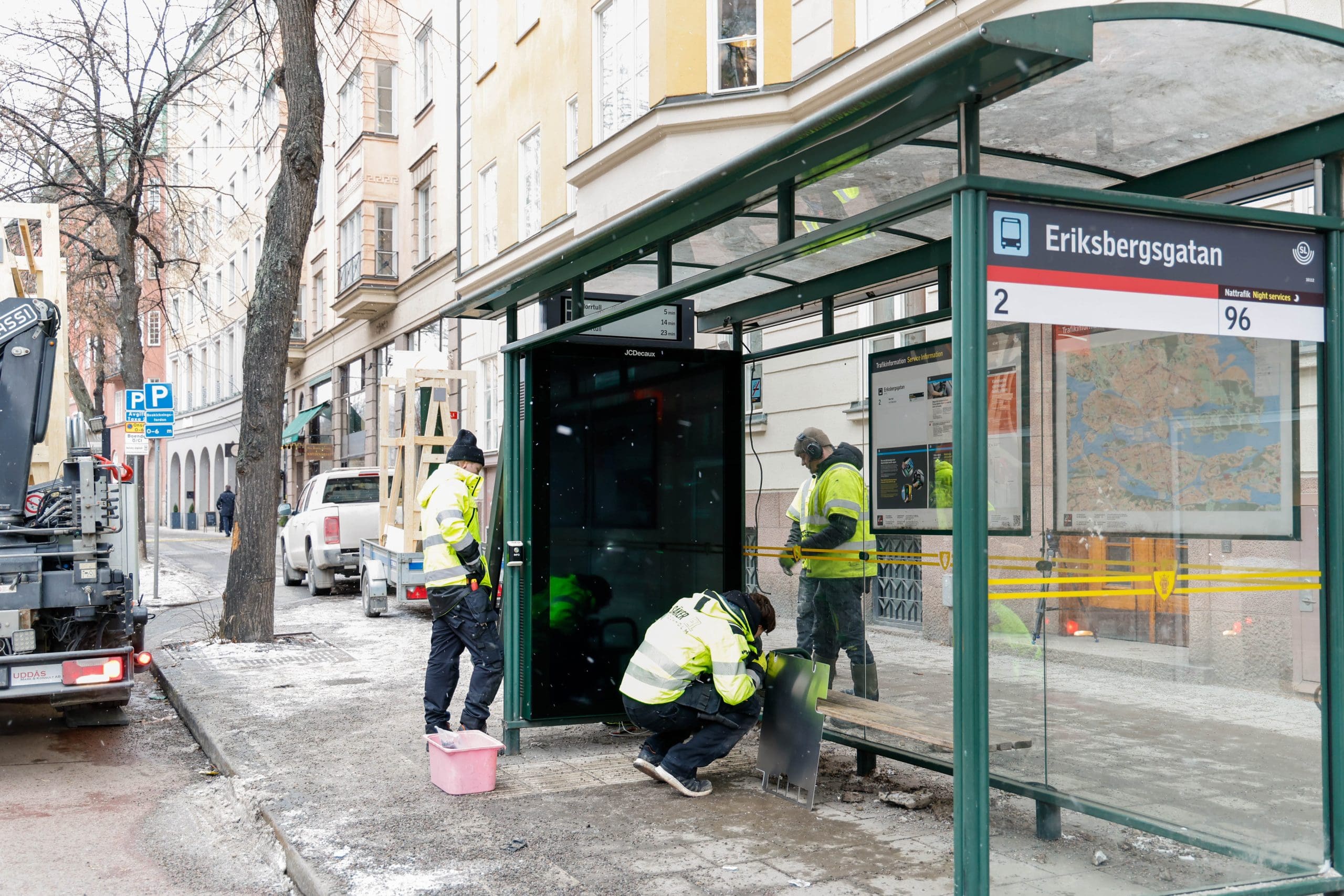
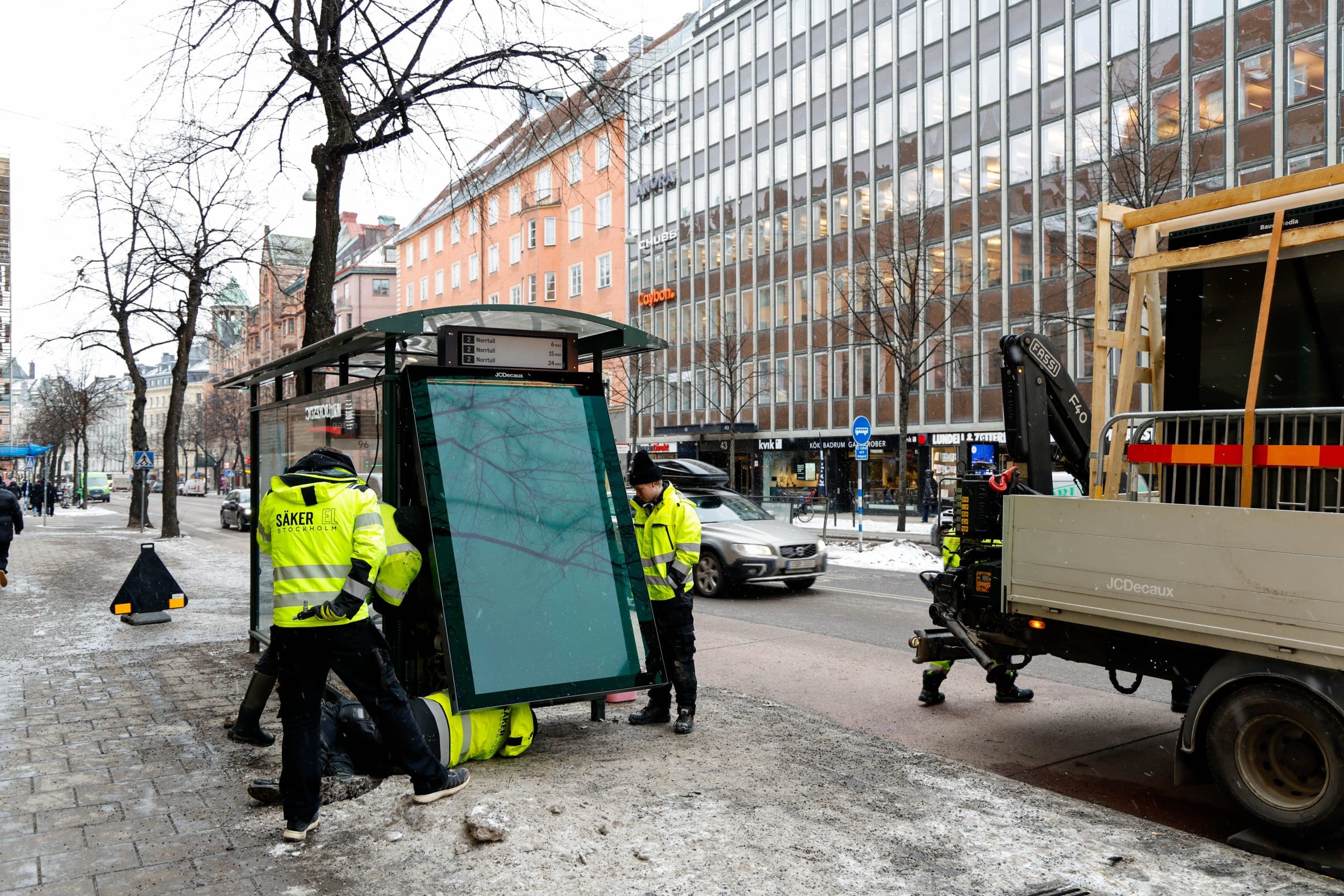
    Dagens Media has interviewed JCDecaux Sweden’s CEO Magnus Heljeberg, Communications Manager Malin Otterström, and Sales Director Cecilia “Cicci” Ottobre about the new SL contract. Below is a summary of the article, where they discuss plans for digitalization, new products, and future investments.Read the full article here: The billion SEK SL contract: This is JCDecaux’s plan ahead

    JCDecaux takes over SL’s advertising spaces – billion-Swedish-krona contract and record digitalization
    When SL’s new advertising contract takes effect in 2026, a historic increase in public transport advertising revenue is expected. The guaranteed annual return will increase by 50 percent, from about SEK 400 million to at least SEK 600 million. Overall, the contracts are estimated to be worth around SEK 5.5 billion during the seven-year period.

    JCDecaux strengthens its position
    In the procurement, JCDecaux won two contracts accounting for approximately 80 percent of the total value. This means the company will surpass Bauer Outdoor (formerly Clear Channel) and become the leading outdoor advertising player in both Sweden and the Nordic region.

    The contracts cover two main areas:

    • Concept stations: 14 of the largest subway and commuter train stations in central Stockholm. Here, 400 analog large formats will be replaced by digital screens, and new solutions will be added along tracks and escalators.

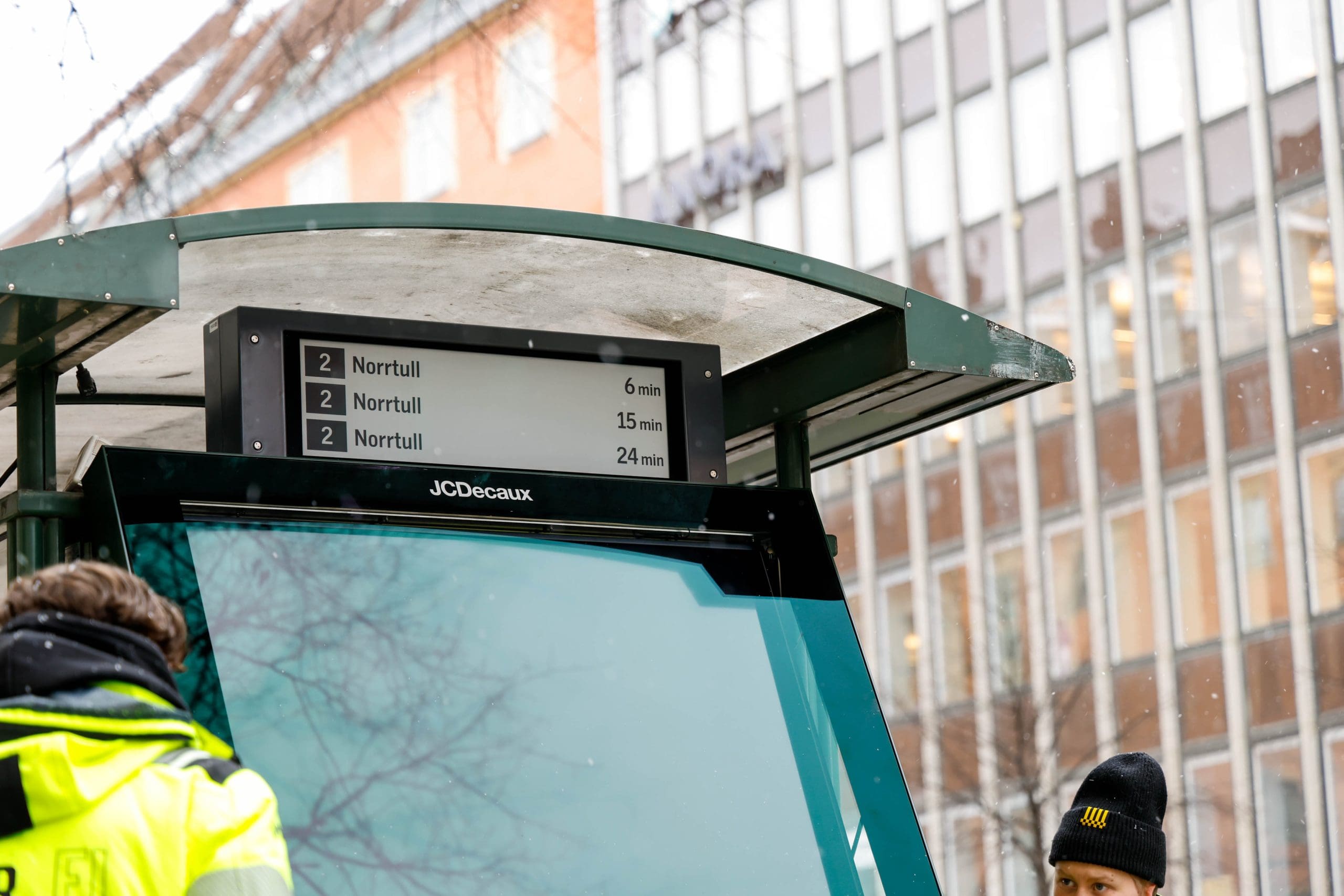
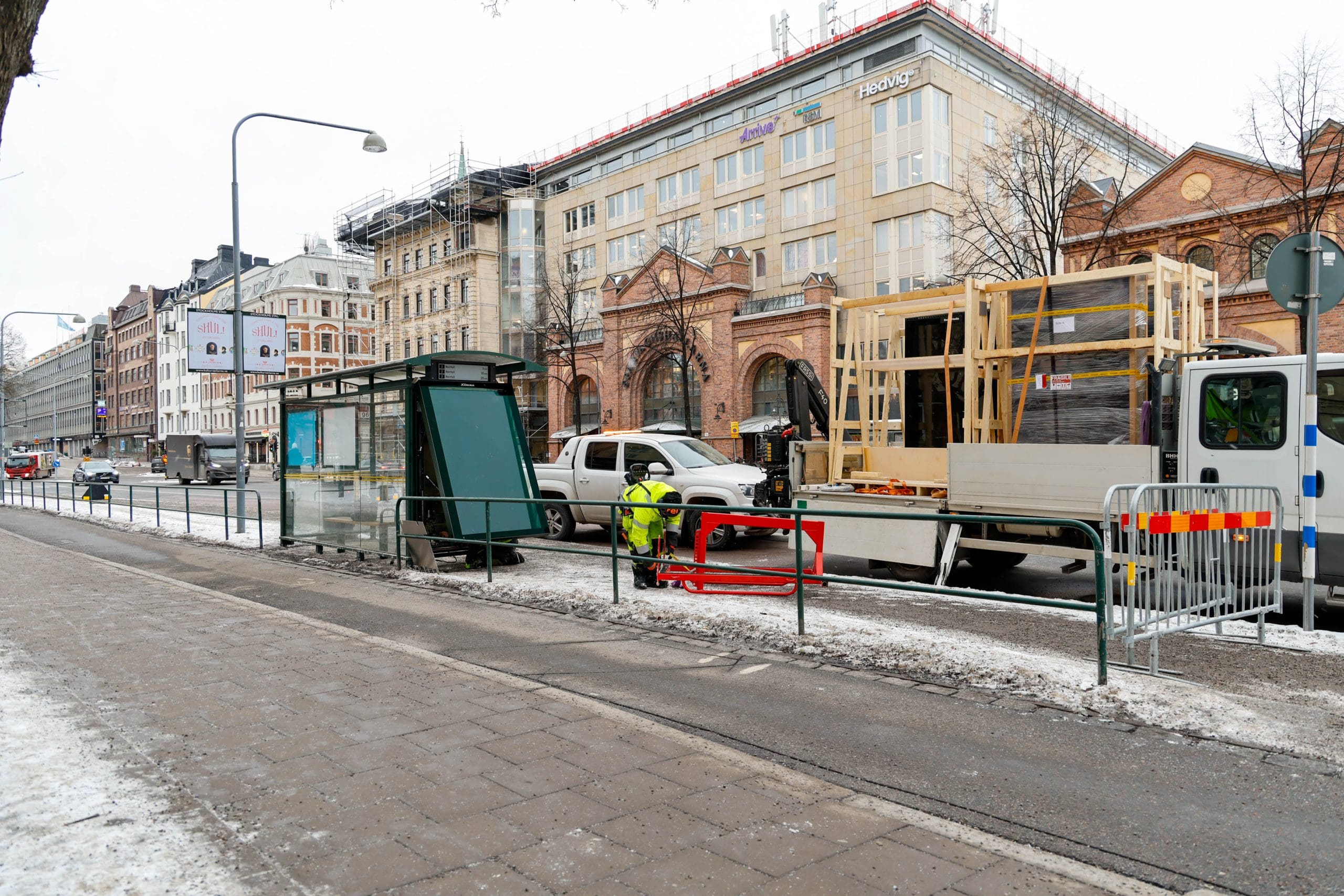
    • Bus shelters: All bus shelters in Stockholm County, more than 1,500 stops. In addition to existing areas, about 200 new advertising signs and extensive digitalization will be introduced.

    Focus on giant screens
    One of the most notable new features is the Metrovision giant screens, measuring 19 square meters, which will be placed opposite the platforms. These will be the largest of their kind in Europe at this location. Installation starts in summer 2026, with a total of 70 screens to be installed.

    Recruitments and preparations
    To manage the initiative, JCDecaux has already hired 20 new employees, with more expected in the coming months. – “Maybe 10–15 more employees, but one step at a time,” says Malin Otterström.

    When the new spaces are launched, the company will also serve as a showcase for the international group.
    “Large international clients in London, New York, or Paris will undoubtedly buy advertising in the Stockholm subway,” says Heljeberg.

    JCDecaux will present its new advertising packages to the market already in September. Bus campaigns start in February 2026 and concept stations in May the same year. – “It hasn’t been difficult to schedule meetings this fall,” the Sales Director Cecilia Ottobre notes.

    Pricing will reflect the unique locations.
    “These are unique advertising spaces, and the value will naturally be adjusted accordingly,” Ottobre says, emphasizing that prices will always be driven by demand.

    Looking ahead
    JCDecaux is investing SEK 150 million in the digital expansion. The company expects 2025 and 2026 to be heavier years profit-wise due to these investments, but sees a strong recovery already in 2027.
    The outdoor media channel has grown steadily in recent years and today accounts for about 5 percent of the ad market according to IRM. Heljeberg believes the share could rise to 6–7 percent within a few years, not least thanks to the possibilities offered by digitalization.
    – “Partly because of this unique investment we are making in the Nordics, and partly because of our reach and the flexibility that comes with digitalization,” he says.

  • Reach, Frequency, and GRP in (D)OOH – how it all connects

    Out-of-home advertising, both OOH and DOOH, is primarily purchased to create reach and generate the right level of pressure within a defined target audience. Consequently, three base metrics are used in almost all planning: reach, frequency, and GRP. These are standard in international guidelines and recognized by industry organizations, such as the OAAA and in JCDecaux’s own guides to (D)OOH measurement.

    What do reach, frequency, and GRP mean in (D)OOH?

    In (D)OOH, these are defined as follows:

    • Reach: The proportion of individuals in the target audience exposed to the campaign at least once during the campaign period.

    • Frequency: The average number of exposures per reached individual.

    • GRP (Gross Rating Points): The product of reach and frequency, often expressed as rating points over time.

    Billups describes these as the foundation for planning and comparing OOH campaigns: reach tells you how many people, frequency tells you how often, and GRP provides a comprehensive view of the campaign’s total pressure. The OAAA’s own glossary defines GRP in (D)OOH as a key metric for campaign delivery and for modeling reach and frequency.

    How are reach and frequency built in practice?

    There are two primary ways to build reach in (D)OOH:

    1. Geographic dispersion: Spreading units across multiple areas, neighborhoods, or cities.

      • Result: More unique individuals are reached → reach increases.

    2. Concentration in key hubs: Placing units heavily where traffic flows are high and visibility is strong (hubs, city centers, premium sites).

      • Result: Frequency increases relatively faster than reach; i.e., the same individuals encounter the message multiple times.

    GRP serves as a tool to balance these effects. Vector Media describes it as a practical compass: should the campaign prioritize reaching as many people as possible (reach) or increasing the number of contacts among those already reached (frequency), given a specific GRP target?

    DOOH: Reach and frequency in shared loops

    In DOOH, an additional dimension enters the equation: a single screen carries multiple campaigns in a shared spot loop. This means that reach and frequency are governed by both:

    • Number of screens and their placement.

    • Share of loop: The percentage of the loop your campaign occupies, and during which hours.

    At JCDecaux and across the industry, we emphasize that the flexibility of DOOH allows you to:

    • Concentrate pressure during specific hours or days when the target audience is most present.

    • Dial up the frequency during defined windows (e.g., launch week, evenings, weekends) without needing to change physical sites.

    The result is that you can build high frequency among the right people rather than spreading pressure evenly throughout the day.

    Best formats for (D)OOH reach, where the “big picture” is crucial

    When planning the best formats and networks for reach in (D)OOH, you must consider the big picture:

    • A broad network of standardized sites: Provides a stable base reach and ensures that a large portion of the target audience is reached at least once.

    • Select sites and premium locations: Used for reinforcement around high-priority areas, such as city centers, retail districts, or transit hubs, where both reach and frequency can be built more rapidly.

    • Placement and overlap: By understanding how different traffic flows and locations overlap, you can:

      • Avoid overexposure within certain segments of the target audience.

      • Free up space to add new contacts in other segments.

    As Cecilia Ottobre, Sales Director at JCDecaux Sweden, states: “It is the interaction between reach, frequency, and GRP that makes (D)OOH planning effective, not the maximization of a single number.”

    Conclusion: Steer toward the right combination, not just high numbers

    • Reach tells you how many people in your target audience you reach.

    • Frequency tells you how often they are reached.

    • GRP connects the two, making it possible to compare campaigns over time and across media.

    By combining a broad network of sites with the smart use of “select” and premium formats—and, in DOOH, the right share of loop at the right time—you can steer toward a level where reach, frequency, and GRP support the campaign’s purpose and its role in the media mix, rather than simply chasing the highest possible number of contacts.

    Relaterade insights

    View all
  • What is DOOH – and when should you choose it over traditional OOH?

    In 1964, Jean-Claude Decaux invented the concept of advertising-funded street furniture. This was a truly analog innovation: physical shelters and street-level assets financed by advertising, which laid the foundation for an entirely new business model for out-of-home (OOH) media.

    Since then, both advertising and urban environments have undergone a fundamental transformation. With the advent of digitalization, mobile screens, and data-driven marketing, the demand for relevance, flexibility, and measurability has intensified. JCDecaux has evolved in tandem with this shift—transforming from a purely analog player into a company that now offers both classic analog OOH and digital out-of-home (DOOH), with capabilities for programmatic buying and real-time data-driven campaign management.

    When JCDecaux became the world’s largest outdoor advertising company in 2011, built on three pillars—street furniture, transport advertising, and billboards—it marked the beginning of a new phase. Today, our mission is to combine the best of both worlds: the scalable reach and urban presence of analog OOH with the precision, dynamism, and measurability provided by digital and programmatically purchased DOOH. In doing so, we continue to develop the core concept established in 1964: making the city more functional, aesthetically pleasing, and relevant for people on the move.

    Two Sides of the Same Coin

    OOH and DOOH are effectively two sides of the same coin. Both are focused on securing visibility in environments where people move: on streets, in plazas, at transit stations, and within public transport systems. The distinction lies in how the message is displayed and the degree of flexibility available in managing it over time.

    Classic OOH (Out-of-Home) consists of static surfaces: bus shelters, street furniture, independent “Eurosize” panels (with public information on one side and advertising on the other), analog subway advertising, and larger-scale billboards such as our “Supersize” format. The message remains displayed 24/7 throughout a campaign period, providing a stable, predictable presence. For brands looking to build broad reach, work with a few clear assets, and keep production simple, this often serves as an effective foundation for the media mix. Standardized networks also simplify planning and procurement for both advertisers and agencies.

    DOOH (Digital Out-of-Home) is the digital evolution of the same channel. Messages are displayed on screens rather than posters, allowing for dynamic changes, optimized playback, and time-sensitive communication without the need for physical printing and installation. This becomes particularly compelling when timing and context are paramount: morning messages along commute paths, lunch offers near retail hubs, or campaigns that scale up during weekends or specific events. Examples of these formats include Digisize (standalone street-level screens), MetroVision (Europe’s largest digital network in the subway), and Supersize Digital (a 60-square-meter digital billboard).

    Performance and Impact

    Research, including studies by JCDecaux and Neuro-Insight, demonstrates that brain response intensifies when a message is contextually relevant, leading to improved ad recall and increased sales. For instance, dynamic, data-driven DOOH campaigns have shown up to 16–17% higher sales and significantly stronger brand impact compared to non-dynamic counterparts (DecisionMarketing / JCDecaux Neuro Study).

    Additional studies show that DOOH often drives more immediate action—such as search queries, store visits, or purchases—and is perceived as more innovative and engaging. For example, data from GroupM indicates that consumers frequently report that DOOH campaigns have prompted direct action, with the channel ranking highly in brand experience and creativity.

    Strategic Integration: OOH and DOOH

    The choice between OOH and DOOH is, therefore, less about “analog vs. digital” and more about the required level of campaign dynamism. If the objective is long-term awareness with a limited number of assets and stable presence, traditional OOH formats are highly effective. However, when a campaign requires high situational relevance—such as price offers, store traffic incentives, or messaging linked to weather, inventory status, or live data—DOOH becomes a more potent tool. Data triggers (such as weather, time of day, or specific events) can be integrated to control when, where, and how various assets are displayed. VIOOH and similar SSP platforms have emerged to make it easier for agencies and advertisers to purchase DOOH programmatically and integrate it into the same planning cycles as other digital channels.

    There is also a creative dimension where OOH and DOOH converge. Various creative activations—which we categorize as “Innovate” solutions—can combine physical structures with digital screens and motion content. A “takeover” of a high-impact digital site offers the same effect as a classic dominance campaign, but with the added power of moving imagery, multiple assets, and real-time messaging control. Industry media, such as The Drum, often highlights the combination of physical impact and dynamic, contextual communication as a key reason for the rapid growth of DOOH in global media plans.

    Conclusion

    In practice, the question is rarely “DOOH or OOH?” but rather “how do we use both to the greatest effect?”

    A common strategy for large-scale campaigns is to:

    • Utilize static OOH to build broad reach and a stable base presence in key environments.

    • Layer DOOH on top to increase relevance over time, manage ad pressure during key moments, and test multiple creative variants.

    Research into the interplay between these channels also shows that they do not merely perform well in isolation; they strengthen the effect of other channels. Lumen and JCDecaux have shown that exposure on public screens can “prime” the target audience, causing them to pay greater attention to advertising in digital channels subsequently.

    When OOH provides reach and physical presence, and DOOH adds time- and data-driven relevance, the result is a channel that both builds long-term brand equity and drives immediate action. This is where out-of-home advertising, in both its analog and digital forms, reaches its full potential within the media mix.

    Relaterade insights

    View all
  • Welcome to Our Exhibition in Almedalen – The City of the Future

    Event

    Welcome to Our Exhibition in Almedalen – The City of the Future

    The cities of the future are green, smart, and connected. 

    Time: June 25, 2025 – June 27, 2025, 09:00-16:00 

    Location: Almedalen, Hamnplan, Skeppsbron 20, Visby 

    Welcome to our exhibition of: – Fully accessible public toilets – Connected and climate-smart bus shelters with defibrillators – Solar cell-powered rental bike systems – Service station with still and sparkling water and a fully automated air pump 

    Date & Time: Tuesday-Thursday, June 24-26, 09:00-16:00 

    Location: Hamnplan, Skeppsbron 20 [Map Link] 

    Book your demonstration time: 

    Email: [email protected] 

    Phone: 073-375 69 87 

    Or feel free to “drop in” from Tuesday to Thursday, 09:00-16:00. 

  • JCDeGolf 2025

  • Snapshots from Summer After Work with Clients

  • JCDecaux welcomes 17 new colleagues

    Nyhet

    JCDecaux welcomes 17 new colleagues

    JCDecaux Sweden is gearing up for the takeover of the largest advertising contract in the Nordics, starting January 2026. The agreement with SL covers all bus stops throughout Stockholm County, the 12 most central subway stations, as well as T-Centralen and Odenplan’s commuter train stations. 

    Throughout spring, 17 new talents have been scouted to strengthen teams across all sectors of the company. In addition, several internal recruits have been promoted to new positions within the company. 

    “We are witnessing great curiosity and anticipation in the market due to our historically large expansion in Greater Stockholm, which is the biggest since JCDecaux established its presence in Sweden in 1989. These new talents bring extensive experience from sales, marketing, and establishment, further strengthening our teams. More individuals will join after the summer,” says Magnus Heljeberg, CEO of JCDecaux. 

    The new hires are: 

    Pontus Källsholm – Key Account Manager 

    Pontus joins JCDecaux in June, previously from Clear Channel. 

    Erika Nygren – Key Account Manager 

    Erika joins us from CityReklam. 

    Jakob Rubertson – Head of Data & Analytics 

    Jakob was previously with YouGov. 

    Örs Szasz – Head of Programmatic 

    Örs comes from PHD. 

    Johanna Andersson – Campaign Planner 

    Johanna joins us from Clear Channel. 

    Alexander Niléhn – Growth Marketing Manager 

    Alexander comes from EPAM Systems. 

    Sebastian Nikula – Senior Advisor 

    Sebastian was previously with DHR. 

    Juni Carlstoft – Content Manager 

    Juni comes from By Malina. 

    David Sjöstrand – Campaign Planner 

    David joins us from Emax Media. 

    Kristian Baumgartner – Production Manager Digital Operations 

    Kristian was previously with STC Training Club. 

    Johannes Personne Havia – Digital Screen Operations Manager 

    Johannes comes from Pixelo. 

    Iris Magnell – Receptionist 

    Iris was previously with T-Jarlen. 

    Yunping Zhou – Finance Assistant 

    Yunping comes from REDGO Sweden. 

    Mikaela Lundström – Production Manager Permits & Construction 

    Mikaela comes from Cinemantrix. 

    Lovisa Ahlsved Tiden – Campaign Planner 

    Lovisa joins us from Refunder Scandinavia. 

    Filippa Berglund – Campaign Planner 

    Filippa comes from the Swedish American Chamber of Commerce in San Diego. 

    Robin Duivestein – Logistics Manager 

    Robin joins JCDecaux in June, previously with BAUHAUS & Co KB. 

    JCDecaux is also internally promoting the following individuals to new roles: 

    Jasmine Bäckström – Ad Operations Digital & Programmatic Specialist 

    Sanna Andersson – Administrative Manager 

    Anna-Cecilia Jonsson – Brand Manager 

    Sandra Modin – Audience Data Specialist 

    Jonas Bergman – Head of Client & Agency Strategy 

    The expansion includes 4,200 digital and analog advertising spaces, making JCDecaux the largest player in outdoor advertising in the Nordics. With an investment of several hundred million kronor, a comprehensive digitalization is underway with 1,000 new digital spaces throughout the county and in Stockholm’s subway. This modernization will create a more dynamic information environment for travelers and offer advertisers new, flexible exposure opportunities, while significantly enhancing the visual experience of both the subway and urban environments. 


    For more information, contact: 

    Communications Manager, Malin Otterström 

    [email protected] 

    073-976 26 94 

  • Creative Breakfast with JCDecaux UK and Coca-Cola

    Event

    Creative Breakfast with JCDecaux UK and Coca-Cola

    This morning, a Creative Breakfast was held in collaboration with Sveriges Annonsörer, featuring David McEvoy, Chief Marketing Officer at JCDecaux UK, and Victoria Adolfsson from The Coca-Cola Company. 

    David McEvoy presented the so-called “two screen strategy,” which leverages powerful synergies between online channels and digital out-of-home advertising (DOOH) to maximize marketing reach and effectiveness. 

    • “Wonderful to be in Stockholm and showcase the future of two screens for Swedish agencies and clients. P2+C=6. Thanks to JCDecaux Sweden for hosting, Victoria Adolfsson from The Coca-Cola Company for their new campaign, and Ulrika Strallhofer from Sveriges Annonsörer for the hospitality,” says David McEvoy from JCDecaux UK. 

    Victoria Adolfsson presented their iconic Share a Coke campaign, making a much-anticipated comeback in a modern, digital version. The relaunch allows a whole new generation, Gen Z, to engage with the campaign for the first time, while also evoking nostalgia and joy for those who remember the original version. 

    A big thank you to David and Victoria for their fantastic presentations! 

  • Breakfast seminar: State of the Nation 2025

    Event

    We are delighted to invite you on the 4th of June to uncover programmatic DOOH insights in the Nordics.


    VIOOH– the leading premium global digital Out-of-Home supply-side platform launch the first in-depth programmatic DOOH research in the Nordics.

    Following success in the UK, Germany, France, Spain, USA, Australia, and Brazil, it is finally time for the Nordics – with insights from Sweden, Norway, Denmark, and Finland.

    The report highlights the latest trends, challenges, opportunities, and future outlook for programmatic DOOH.

    This is a unique opportunity to deepen your knowledge, network, and enjoy an inspiring moment in the programmatic DOOH world.

    Please feel free to share internally with relevant colleagues who you don’t want to miss this.


    WHEN: Wednesday 4th of June 2025
    08:00am – 10:00am
    WHERE: JCDecaux, Stureplan 13 Stockholm

    AGENDA:

    08:00-08:30 Breakfast

    08:30-08:50  Welcome and State of the Nation Key Findings Presentation

    08:50-09:25 Industry Panel with JCDecaux Sweden, The Trade Desk, Vistar Media and Tre Kronor Media

    09:25 – 09:50 Q&A

    Sign up here!

    Looking forward to see you all here!

  • Insight Lunch with Erik Modig

    Event

    Insight Lunch with Erik Modig

    Yesterday, we hosted the second Insight Lunch together with Erik Modig, one of Sweden’s top researchers and marketing geniuses. During the lunch, we delved into how scientific methods can be used to maximize the effect of outdoor campaigns, with a particular focus on econometric modeling for outdoor advertising. 

    “The results of an econometric modeling of outdoor advertising are highly dependent on the quality of the input data and the design of the model. To get an accurate picture of outdoor advertising’s contribution, one should examine data granularity. The key is to focus on outdoor advertising’s strengths in terms of reach, creativity, and the ability to influence customers and growth thanks to its ‘Super Bowl effect’!” – Erik

    A big thank you for a fantastic lecture and to everyone who attended! 

  • JCDecaux Sweden Launches Programmatic Buying via VIOOH

    Nyhet

    JCDecaux Sweden Launches Programmatic Buying via VIOOH

    JCDecaux Sweden, part of the global JCDecaux network, is launching its programmatic digital outdoor offering, strengthening Stockholm’s position as the hub for programmatic advertising in Scandinavia. Through the partnership with VIOOH, the leading global SSP platform for digital outdoor advertising, the door is now open for programmatic purchases to impact areas outdoors. 

    Now, 270 of JCDecaux Sweden’s digital screens are available for programmatic buying. Of these, 225 are strategically placed in Stockholm’s city center, with the remainder at strategically selected locations across Sweden. Central to programmatic outdoor trading is the detailed and reliable data from Outdoor Impact, the nationally recognized measurement system for outdoor advertising. This granular data provides advertisers with advanced audience segmentation and real-time optimization of their campaigns. 
    “By enabling programmatic purchases across our network, we not only complement the Swedish DOOH landscape but also offer brands a streamlined gateway to reach high-spending Scandinavian target audiences,” says Magnus Heljeberg, CEO of JCDecaux Sweden. “Stockholm, as Scandinavia’s capital, is a crucial market for both local and global campaigns, and our programmatic integration simplifies access to this attractive market.” 

    The launch enables increased flexibility and data-driven optimization, making it easier for brands to execute targeted campaigns based on detailed audience data. 

    “The launch of Programmatic DOOH is perfectly timed to meet the growing demand for programmatic digital outdoor advertising in Sweden, both locally and internationally. Advertisers are looking for smart, efficient, and data-driven solutions offering flexibility, and this is now possible,” says Cecilia Ottobre, Sales Director at JCDecaux Sweden. 

    The collaboration with VIOOH ensures seamless integration with over 40 major global DSPs, making JCDecaux Sweden’s digital network accessible to advertisers worldwide. 

    “The integration of JCDecaux Sweden provides both local and international brands with the opportunity to use VIOOH Trading Manager, enabling data-driven programmatic trading in real-time to engage with their audiences, including in Scandinavia’s most influential city,” says Gavin Wilson, Global Chief Commercial Officer at VIOOH. 

    JCDecaux Sweden looks forward to offering the dynamic possibilities that programmatic buying entails to media agencies and advertisers. With access to Stockholm’s high-spending audiences and the efficiency of data-driven programmatic buying, advertisers can achieve audience-tailored campaign impact in the Nordic region. JCDecaux’s programmatic offering is available via all major DSPs. 

    For more information, please contact JCDecaux Sweden’s Communications Director, Malin Otterström. 


    About JCDecaux 

    JCDecaux Sweden is part of the global JCDecaux group and is one of the country’s leading media companies. The group is the world’s largest provider of outdoor advertising with over 1 million advertising spaces in more than 80 countries. JCDecaux Sweden offers a comprehensive network of outdoor advertising spaces in Sweden’s 25 largest cities, strategically placed in city centers, shopping areas, public transport, and along the country’s busiest roads, with reach covering more than half of Sweden’s population. From January 2026, JCDecaux will expand its offering with over 4,000 new advertising spaces in Stockholm’s subway and in all shelters from Nynäshamn to Norrtälje. 

    About VIOOH 

    VIOOH is a leading global SSP platform for premium digital outdoor advertising. Launched in 2018 and headquartered in London, the platform connects buyers and sellers on a premium marketplace, making OOH easily accessible. Led by a team of experts in digital OOH and programmatic technology, VIOOH is pioneering the transformation of the OOH sector, enhancing digital omnichannel campaigns through the use of programmatic features and data. VIOOH currently conducts programmatic trading in 29 markets, with more underway.  

    For more information about VIOOH, please visit www.viooh.com or follow us on LinkedIn. 

  • Creative Breakfast with McDonald’s and Google

    Event

    Creative Breakfast with McDonald’s and Google

    This morning featured an inspiring creative breakfast in collaboration with Sveriges Annonsörer. Two groundbreaking campaigns were presented, highlighting how innovation can drive both sustainability and creativity. 

    McDonald’s Sweden and NORD DDB showcased their award-winning campaign “Deal with the Trash.” As part of McDonald’s sustainability efforts, users can scan packaging to receive offers in McDonald’s app. The campaign, in partnership with Keep Sweden Tidy, aims to reduce littering and inspire better consumer behavior. 

    Google and Monks displayed their AI-driven campaign that transformed the streets of Stockholm into a magical winter wonderland during Christmas. Using AI-powered features in Google Pixel and digital billboards from JCDecaux, interactive scenes like gingerbread bridges and giant Christmas gifts were created, while AI offered creative gift ideas. The campaign demonstrated how technology can create engaging experiences in digital environments. 

    A big thanks to Michaela Bognäs, Jesper Andersson, Nora Strandberg Henriksson, and Viktor Thunmarker for fantastic presentations!